Overview
Where Three Wildlife Corridors Meet
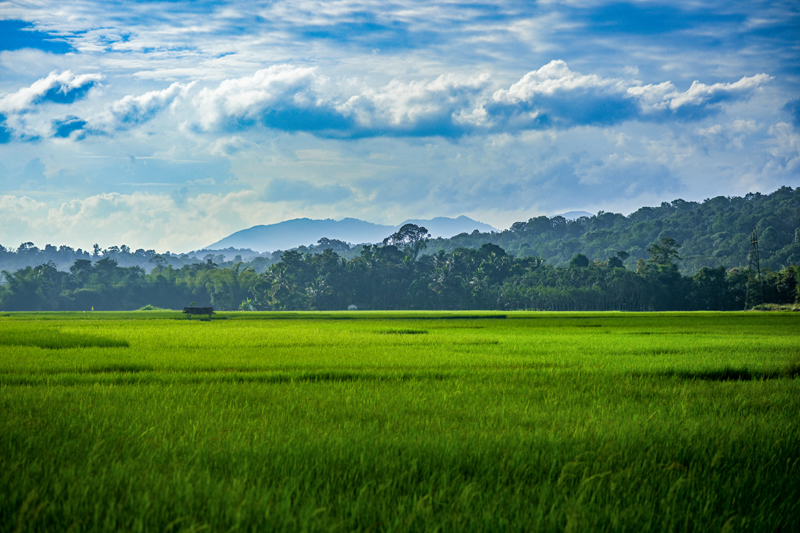
Wayanad means "land of paddy fields" in the old tongue, but forest is what actually defines the district today. It sits at the point where the Western Ghats rise to meet Karnataka and Tamil Nadu, forming part of the Nilgiri Biosphere Reserve — at 5,520 sq. km, the largest protected wilderness area in South Asia and one of UNESCO's recognised Man and Biosphere zones. Within Wayanad itself, wildlife moves through three interconnected protected areas: Muthanga Wildlife Sanctuary (linked to Bandipur, Karnataka), Tholpetty Wildlife Sanctuary (linked to Nagarhole, Karnataka), and the buffer forests around them.
What makes Wayanad different from Kerala's other highland destinations is the tribal presence. Roughly 18% of the district's population — around 36 recognised communities including the Paniya, Kurichiya, Adiya, Kattunaika and Kuruma — has lived at the forest edge for generations, and a growing number now run their own tourism operations rather than working as staff for outside operators. That distinction matters more than it might sound: it's the difference between tourism revenue leaving the district and tourism revenue staying in it.
What There Is to Do
Six Ways to Experience Wayanad Responsibly
Kerala's Responsible Tourism Mission, active in over 600 village clusters since 2017, gives Wayanad a formal, audited standard for what counts as genuine eco-tourism here: local staffing, transparent revenue-sharing with host communities, and real waste-management and noise protocols in forest buffer zones — not just a "green" label on a conventional resort.
Tribal Forest Homestays
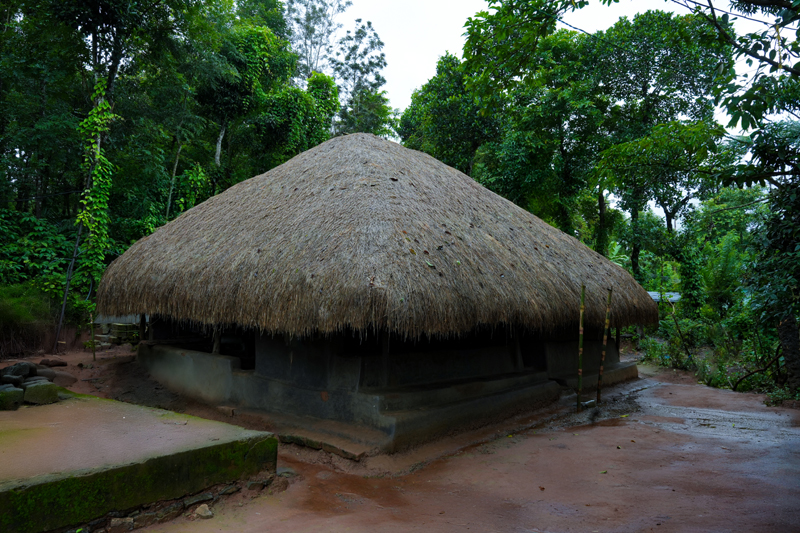
Nights spent with a Paniya, Kurichiya or Adiya household — forest monitoring walks at dawn, meals cooked over wood fires with foraged ingredients. Revenue is typically split roughly 60% to the host household, 20% to a community welfare fund, 20% to conservation work.
Trekking
From half-day tea-estate walks in Vythiri and Meppadi to the full-day Chembra Peak trek (2,100 m) with its heart-shaped lake at 1,800 m. Tribal-guided routes through Kurichiyarmala aren't on any public map — they're shared orally.
Wildlife Safaris
Muthanga for large elephant herds, Tholpetty for leopard, dhole and the rare tiger. Night safaris — available in very few Indian forest zones — reveal a genuinely different nocturnal forest at Tholpetty.
Bamboo & Craft
The Uravu Bamboo Grove in Thrikkaipetta, Asia's largest bamboo research and craft centre, has trained tribal artisans since 1996. A guided walk covers ecology and craft together, with a weaving workshop led by Kurichiya women.
Organic Farm Stays
Multi-day stays on working coffee, cardamom and pepper farms in Vythiri and Ambalavayal, where guests join the actual agricultural cycle rather than watching a token demonstration.
Birding
Over 350 recorded species including 25 Western Ghats endemics. The Great Hornbill, Kerala's state bird, is resident here; the Malabar Trogon and Sri Lanka Frogmouth are among the district's most sought-after sightings.
Wildlife
What You Might See, and Where
Muthanga and Tholpetty have distinct characters — Muthanga is known for large elephant herds, Tholpetty for rarer encounters. Jeep engines must be cut within 200 m of a predator, feeding wildlife is a criminal offence under the Wildlife Protection Act, and flash photography is banned at all times; operators with genuine conservation credentials won't chase or circle animals for a better photo.
| Wildlife | Best Location | Best Time | Probability |
|---|---|---|---|
| Asian Elephant | Muthanga / Tholpetty | Oct–Feb mornings | Very High |
| Gaur (Indian Bison) | Tholpetty / Kurichiyarmala | Oct–Mar | High |
| Leopard | Tholpetty night safari | Nov–Feb | Moderate |
| Tiger | Tholpetty / Muthanga borders | Oct–Feb | Low–Moderate |
| Malabar Giant Squirrel | Tholpetty / forest trails | Year-round | High with guide |
| Indian Dhole | Muthanga buffer | Nov–Mar mornings | Moderate |
| Great Hornbill | Thirunelli forest / Tholpetty | Oct–Mar | High with guide |
Wayanad sits within one of India's most active elephant corridors, and human-elephant conflict here is a genuine, serious issue rather than a tourist novelty. Keep at least 30 m distance at all times, never sound a vehicle horn near an elephant, and report any conflict incident to the Forest Department helpline: 04936-202251.
Who You Are Travelling With
Wayanad's Tribal Communities
Wayanad has one of India's highest concentrations of Scheduled Tribe population — roughly 18% of the district's residents across 36 recognised communities. The largest groups are the Paniya (historically agricultural labourers, increasingly active in tourism), the Kurichiya (forest cultivators with detailed ecological knowledge), the Adiya (traditional forest honey-collectors), the Kattunaika (a Particularly Vulnerable Tribal Group with deep-forest knowledge) and the Kuruma (traditional cattle-keepers and weavers).
These are knowledge-holders, not photo subjects. A Kurichiya elder identifying an edible mushroom, a Paniya guide reading elephant body language, a Kattunaika woman naming a medicinal plant absent from any pharmacological database — this is a form of expertise the standard forest-guide fee usually undervalues. Where you can, pay above the minimum rate, and choose operators who do the same.
Planning Your Visit
Getting There, Staying, and Permits
Getting There
Calicut International Airport (Kozhikode/CCJ) is roughly 80–100 km from Kalpetta, Wayanad's district headquarters, via the Thamarassery Ghat's 18 hairpin bends — about 2–2.5 hours by road. Wayanad has no direct rail link; the nearest stations are Kozhikode (80 km) and Mysuru (120 km, Karnataka). KSRTC buses run from Kozhikode, Kochi, Bangalore and Mysuru.
Where to Stay
| Accommodation Type | Cost Range | Best For |
|---|---|---|
| Tribal Forest Homestay | ₹800–2,000/night | Deep immersion, cultural learning |
| Bamboo Eco Hut | ₹1,500–4,000/night | Couples, solo travellers |
| Organic Farm Stay | ₹2,000–5,000/night | Families, slow travel |
| Community-Run Eco Lodge | ₹3,000–7,000/night | Comfort plus community benefit |
| Forest-View Retreat | ₹6,000–20,000/night | Privacy, higher comfort |
Forest Entry Permits
All sanctuary entry requires pre-booked permits via the Kerala Forest Department's e-permit portal, up to 30 days ahead — book at least 7–10 days out in peak season (December–January). Night safari slots at Tholpetty sell out fast and should be booked weeks in advance. Entry fees run roughly ₹150–200 per person plus jeep hire (₹800–1,200) and a mandatory guide fee (₹300–400); commercial photography needs separate District Forest Officer approval.
Wayanad Forest Division: 04936-202251 · Muthanga Range: 04936-241600 · Tholpetty Range: 04985-205020 · Kerala Tourism Helpline: 1800-425-4747
When to Visit
Best Time to Visit Wayanad
Most guides steer first-timers away from the monsoon, and that's sensible if trekking and safaris are the priority — both are significantly curtailed. But it's the season that actually explains Wayanad's ecology: roughly 2,500–3,000 mm of rainfall a year, almost entirely concentrated in these months, is what sustains everything else. For prepared travelers, September–November — the post-monsoon transition — is widely regarded locally as the single best window: forests at peak biological intensity, rivers full, crowds not yet arrived.
Why Your Visit Matters
The Pressures Wayanad's Forests Face
Human-elephant conflict has intensified as agricultural expansion fragments forest connectivity — the Wayanad Forest Division recorded over 340 elephant-crop conflict incidents in 2023–24, with at least 4 human fatalities. The root issue isn't unusual elephant behaviour; it's corridors broken by roads and settlement that force elephants through populated areas during migrations they've followed for generations.
Invasive species are a second pressure — Lantana camara, introduced during colonial-era forest management, has displaced native groundcover across large sections of the forest understory. And the district's own rapid tourism growth through the 2010s, from a quiet destination known mainly to Kerala residents into a Bangalore weekend getaway, has driven hotel construction and plastic pollution that actively works against the community-led model described above. Choosing a tribal homestay over a resort, or a guided bamboo trail over a resort-arranged jeep tour, is a small but real intervention in that economics.
Photography Ethics
A Note on Photographing Wayanad
Never use flash near wildlife. Don't share GPS coordinates of leopard or tiger sightings publicly — it draws irresponsible visitors to sensitive locations. Photograph tribal community members only with direct, individually given consent, not a general wave from a group leader, and be especially cautious photographing children in Adivasi settlements, since images can circulate in ways families can't predict or control.
Frequently Asked Questions