What Is Eco-Tourism, Really?
The International Ecotourism Society defines it as responsible travel to natural areas that conserves the environment, sustains the well-being of local people, and involves interpretation and education. In Kerala, that definition has had unusually strong institutional backing — the state government built an entire policy framework, the Responsible Tourism (RT) Mission, around putting it into practice.
In concrete terms: eco-tourism is tourism where the money circulates back into conservation and community wages rather than flowing mostly to outside operators and intermediary booking platforms. A tribal guide walking you through Wayanad's forest before dawn, a fisherwoman in Kumarakom cooking a meal from her own garden, a former poacher now working as a Periyar Tiger Reserve naturalist — these aren't marketing images, they're the actual economic structure the RT Mission was built to create.
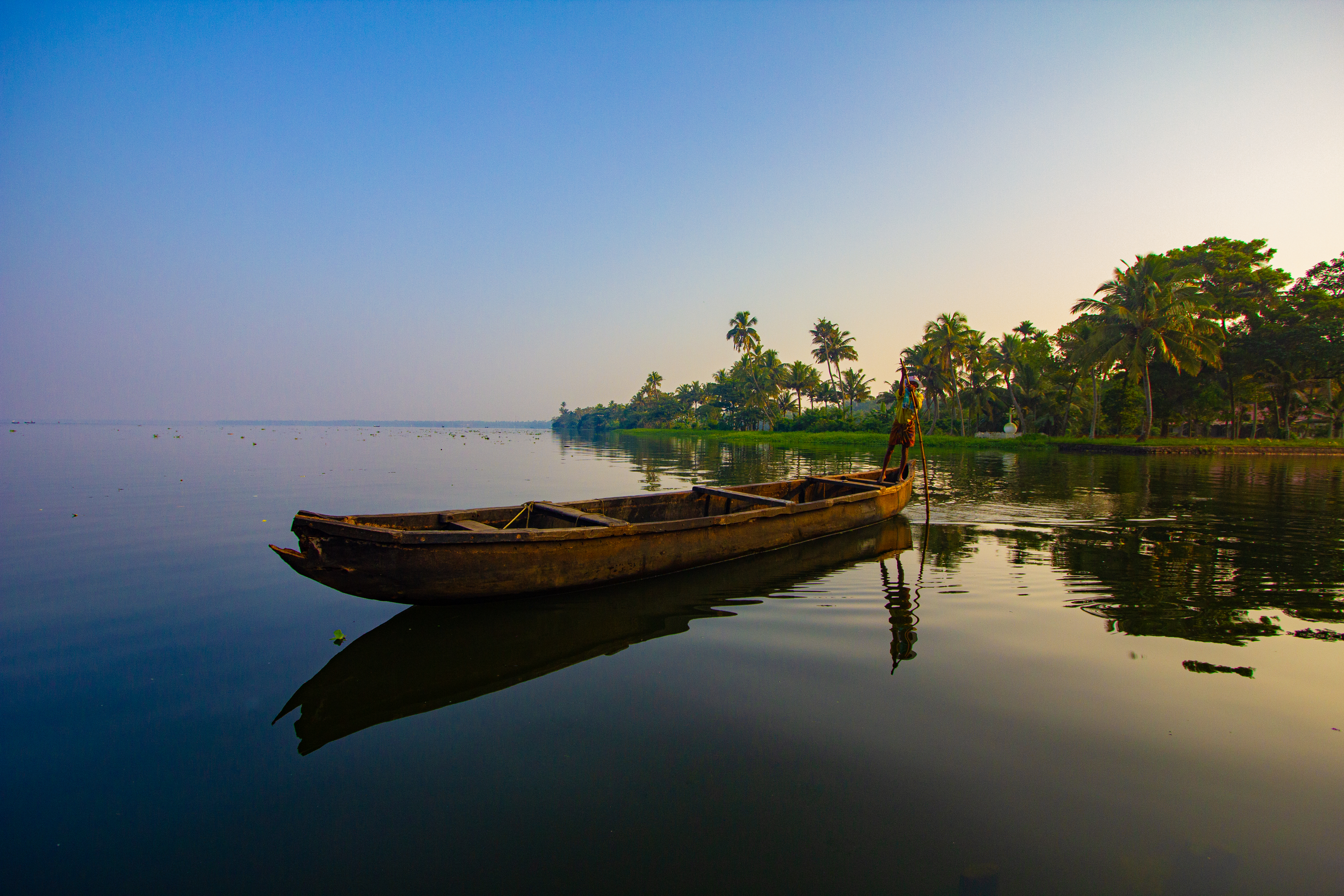
The Six Pillars of Kerala's Eco-Tourism Model
Conservation First
Tourism is permitted only where it demonstrably supports biodiversity conservation — entry quotas, buffer-zone rules and seasonal closures are enforced at major sites.
Community Ownership
A large share of Kerala's RT-certified ventures are run by local tribal, fishing or farming co-operatives, so revenue stays inside the village economy.
Education & Interpretation
Certified centres offer guided natural-history walks and cultural context — understanding a forest is treated as the first step toward protecting it.
Low Environmental Footprint
Solar power, rainwater harvesting and plastic-free operation are expected at certified green stays; electric boats are replacing diesel on some backwater routes.
Cultural Integrity
Sacred groves, tribal ritual and traditional craft aren't treated as performances for tourists — visitors are guests, and cultural exchange is meant to run both ways.
Long-Term Viability
Sites showing ecological stress are meant to be rested or capped, rather than the economics simply overriding the ecology.
How Kerala Actually Built This Model
Kerala's Responsible Tourism story is often told with either 2007 or 2017 as "the" founding year — both are correct, for different reasons, and worth separating clearly.
A citizen-led movement stopped a hydroelectric dam that would have flooded pristine rainforest, establishing an early statewide precedent that development and conservation had to be reconciled deliberately, not left to chance.
The Kerala government's designation set up the conditions for what came next.
Following stakeholder workshops, Responsible Tourism was piloted in four destinations — Kumarakom, Kovalam, Thekkady and Wayanad — with Kumarakom formally inaugurated in March 2008 as the flagship model.
Kumarakom won India's National Tourism Award for Best Responsible Tourism Initiative, the first major sign the pilot was working.
Kerala formally launched its dedicated RT Mission Society on 20 October 2017, scaling the Kumarakom-style model into a standing statewide institution rather than a pilot.
Following major flooding, seasonal closures, trail-capacity limits and corridor protection have become a standard part of how eco-tourism sites are managed, not an afterthought.
Kumarakom's model has since been recognised internationally, including a UNWTO Ulysses Award for innovation in public policy — one of the reasons it's cited so often as a reference case for community-based tourism outside India as well.
Four Ecological Zones, Four Kinds of Experience
Kerala packs an unusual range of ecosystems into roughly 580 km of coastline and a narrow inland belt — which is a large part of why its eco-tourism model has so many distinct forms.
Western Ghats Rainforest
Silent Valley, Eravikulam and the Wayanad forests sit within this belt — among the oldest forest systems on Earth, predating the Himalayas, with plant genera found nowhere else.
Midland Spice Country
Cardamom, pepper and coffee country between the highlands and coast — the same economy that drew Arab, Chinese and European traders for two millennia.
Backwater Wetlands
A 900 km network of lagoons and canals, including the Ramsar-listed Vembanad and Ashtamudi lakes, and Kuttanad's centuries-old below-sea-level rice farming.
Arabian Sea Coastline
Mangrove estuaries, Olive Ridley turtle nesting beaches, and fishing communities — the Mukkuvar, Araya and Dheevara among them — with generations of sustainable-fishing knowledge.
What Responsible Travel Looks Like on the Ground
- Choose community-run operators — homestays and guides registered with the RT Mission put your booking fee into village co-operatives rather than intermediary agencies.
- Respect visitor caps and entry limits — daily quotas exist to protect wildlife movement; paying a tout to bypass one directly harms the ecosystem you came to see.
- Carry zero single-use plastic — refillable bottles and cloth bags are expected, not optional, at most certified eco-stays.
- Ask before photographing — tribal community members, sacred rituals and private homes deserve the same courtesy you'd expect for your own home.
- Eat local and seasonal — choosing local fish and backyard-grown vegetables at community-run kitchens supports the same agricultural economy the ecology depends on.
Comparing Kerala's Eco-Stay Options Honestly
Not all "eco" labels mean the same thing. Here's a rough, honest comparison — always verify RT certification directly rather than taking a label at face value.
| Stay Type | Community Benefit | Typical Cost/Night | Best For |
|---|---|---|---|
| Tribal Homestay | Highest — revenue stays almost entirely with the host household | ₹800–2,500 | Deep cultural immersion |
| RT-Certified Homestay | High — audited revenue-sharing | ₹1,500–5,000 | Families & couples |
| Community Houseboat | Good — co-operative crewed | ₹4,000–12,000 | Backwater experience |
| Forest Eco-Camp | Good — includes guide & permit fees | ₹2,500–8,000 | Wildlife & adventure |
| Certified Green Resort | Moderate — verify certification | ₹6,000–22,000 | Comfort-seekers |
| Luxury Glamping | Lower — often outside the RT network | ₹15,000–45,000 | Comfort over community impact |
⚠ Always ask an operator for their RT certification number and verify it directly with Kerala Tourism rather than trusting the word "eco" on its own.
🌿 Find & Book a Certified Eco-Stay
Compare RT-certified homestays and green resorts, and check recent guest reviews before booking.
Kerala's Eco-Tourism Seasons
Oct–Feb · Peak
Clearest trails, best wildlife visibility as animals concentrate near water, migratory birds arrive at the wetlands. Book 3–4 months ahead.
Mar–May · Coastal Best
Coast at its calmest before the monsoon; fewer crowds at forest reserves; peak butterfly season in the highlands.
Jun–Aug · Monsoon
Waterfalls at full force, Ayurveda's traditional peak season, lowest visitor numbers — though some high-altitude treks and forest trails close.
Sep–Oct · Best Value
Forests at their lushest post-monsoon, Onam festival season, and often the best prices of the year at community stays.
✈️ Booking Ahead for Peak Season
Peak-season slots at RT-certified stays fill 3–4 months out — worth locking in flights early and considering protection against delays, since a missed connection can unravel a tightly booked eco-itinerary.
✈️ Fly In & Protect Your Trip
Compare flight fares and consider delay/cancellation protection before locking in your dates.
Kerala Eco-Tourism — Frequently Asked Questions
Seven Habits Worth Carrying With You
- Choose community-owned operators over large outside-managed chains.
- Carry zero single-use plastic into any forest, wetland or coastal zone.
- Follow your guide's instructions in every wildlife encounter, without exception.
- Ask before photographing people, rituals or private sacred spaces.
- Eat local and seasonal, supporting village agriculture and fishing.
- Never buy wildlife products, coral, shells or endangered plant derivatives.
- Share your experience honestly — including calling out greenwashing when you see it.
Some links on this page are affiliate links — if you book through them, we may earn a small commission at no extra cost to you. See our Affiliate Disclosure for details.