Discover Kerala’s Natural Beauty

Book Your Adventure

The Living Temples of Kerala: A Deep Dive into the Sacred Groves (Kavus) for Eco-Conscious Travellers

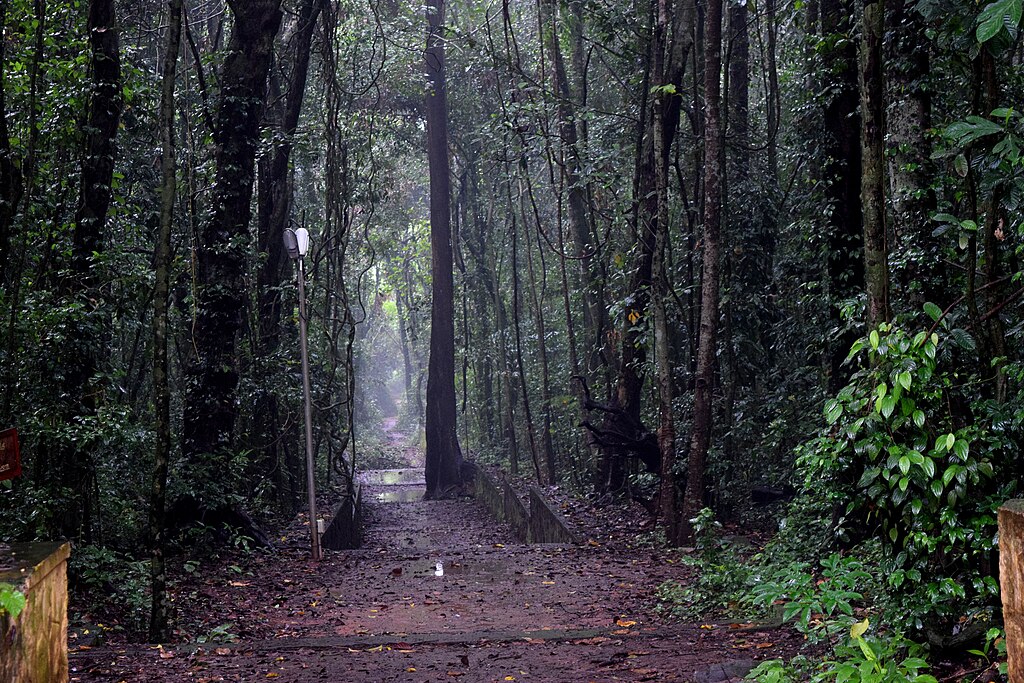
premises of iringol-kavu

premises of iringol-kavu

Image Courtesy: Ranjithsiji, CC BY-SA 4.0 via Wikimedia Commons

The state of Kerala, often hailed as "God's Own Country," preserves a unique spiritual landscape where the divine is inseparable from the wild: the sacred groves, traditionally known as Kavus. 1 These small, protected patches of natural vegetation, historically common along the Malabar Coast, are far more than mere woodlands; they are ancient ecological havens dedicated to local deities, ancestral spirits, or family gods, representing a profound, millennia-old pact between human communities and the natural world. 3 Understanding the Kavu requires an appreciation of its sophisticated ecology, complex cultural guardianship, and its critical role in sustaining Kerala’s biodiversity amidst accelerating urbanization.

I. The Spiritual Geography of Kerala: Defining the Kavu Ecosystem

1.1. Defining the Sanctuary: Kavu—Kerala’s Ancient Ecological Haven

The Kavu nomenclature is foundational to understanding Kerala’s traditional conservation ethos. 3 Culturally, these groves hold deep significance, serving as sites for rituals and festivals that reinforce community ties to nature and spirituality. 3 They embody the essence of animism in Kerala, reflecting the ancient belief that all elements of nature—both animate and inanimate—possess a soul, thereby warranting reverence and conservation within the immediate neighborhood of human habitation. 1

Ecologically, Kavus are recognized as vital relics of the evergreen forests that once dominated the region. 6 They function as critical conservation hotspots, supporting high species diversity in fragmented landscapes and providing indispensable ecosystem services that extend far beyond their physical boundaries. 2 The preservation of these sites, often attributed to deeply ingrained cultural taboos that limit human interference, stands as a prime example of traditional knowledge utilized for sustainable environmental stewardship. 3

1.2. Classification and Custodianship: The Three Pillars of Kavu Management

Kavus are structurally diverse, classified both by the deities they house and by their management system. 8 Deities typically include Ayyappan, Bhagavathy, or Muthappan (an incarnation of Siva). 8 A primary and widely distributed subtype is the Sarpa Kavu (Snake Grove), dedicated explicitly to serpent deities and ancestral spirits, symbolizing a deep history of ophiolatry in the region. 3

In terms of governance, the management structure critically influences the ecological fate of the grove. 9 Kavus are broadly categorized into three types:

  1. Family-Managed (Tharavadu Kavus): Preserved by specific lineages or traditional joint families, often with a dedicated protector family responsible for ensuring the grove's flora and fauna remain undisturbed. 3
  2. Community-Owned (Oor Kavus): Maintained collectively by villages, such as the Muchilot Bhagavati Kavus, which are enclosures tied to the Vaniya community. 3
  3. Devaswom/Statutory Managed: Groves that have been transferred to or are overseen by temple management boards, such as Iringole Kavu. 9

Research into vegetation structure has highlighted a vital relationship between custodianship and the grove’s ecological resilience. Analysis using the Ramakrishnan Index of Stand Quality (RISQ) demonstrates that groves managed by single families, such as Ollur Kavu, often exhibit significant disturbance. 9 These family-managed sites show low stem density of mature trees (367 ha-1) and poor regeneration potential, with the ratio between mature trees and saplings being 1:0.4. The high RISQ values (between 2.265 and 2.731) signify a dominance of light-demanding species, confirming the disturbed state. 9 Conversely, institutionally managed sites like Iringole Kavu and S.N. Puram Kavu show lower RISQ values (between 1.319 and 1.648), indicating a closer resemblance to climax vegetation and less ecological disturbance. 9

This data underscores a critical understanding: the decline of the traditional joint family system, exacerbated by economic pressures and land fragmentation, weakens the necessary dedication required for conservation. 13 The traditional, private protection mechanisms, though profound in belief, are highly vulnerable to modern social shifts. Therefore, the successful future conservation of the numerous, smaller, family-owned Kavus requires strategies that recognize and support the socio-economic vulnerability of private owners, suggesting that external financial assistance, such as the creation of a corpus fund, is necessary to re-empower and sustain traditional custodianship. 14

II. Ecological Nexus: Kavus as Biodiversity Hotspots of the Western Ghats

The scientific value of Kerala’s Kavus is immense, positioning them as essential components of landscape ecology and biodiversity preservation within one of the world's mega-biodiversity hotspots: the Western Ghats. 15 Their small size belies their concentrated ecological significance.

2.1. Microcosms of the Evergreen Forest: Function as Genetic Reserves

Kavus function as irreplaceable ecological benchmarks, often exhibiting higher species richness than adjacent disturbed areas. 3 Studies confirm their status as conservation hotspots by quantifying impressive biodiversity metrics. For instance, specific Kavus have recorded 73 tree species, 13 of which are endemic to the Southwestern Ghats. 3 Furthermore, these sites maintain ecosystem resilience through rich soil fungal communities, notably dominated by the Ascomycota phylum, which are crucial for nutrient cycling. 3

The importance of the Kavu becomes dramatically clear in regions lacking contiguous natural forests. Alappuzha, for example, is the smallest district in Kerala with the highest population density, and it contains no natural forests; yet, its Kavus function as the only natural remnants, preserving a total of 687 plant species. 17 These isolated groves, therefore, act as critical island refugia. Their dense root systems and leaf litter also promote soil conservation, preventing erosion and preserving fertility, especially on degradation-prone slopes. 3 The mature tree biomass contributes significantly to climate mitigation through carbon sequestration, with storage potential comparable to that of large natural forests. 3

2.2. The Pharmacological and Agro-Genetic Treasure Trove

Beyond general biodiversity, Kavus are vital genetic reservoirs, holding plant species with significant pharmacological and agro-economic importance. 17 They are treasure houses of rare and medicinal plants, with one study conducted in non-forested regions documenting the presence of 290 species of medicinal plants out of the total flora. 13 These include culturally significant species like naalppamaram (a group of four medicinal figs) and dashapushpam (ten sacred flowers). 1

Kavus serve as sanctuaries for critically endangered and endemic flora. Endemic species to the Western Ghats such as Knema attenuata, Myristica beddomei, Myristica malabarica, and Myristica fatua find a vital sanctuary within these groves. 15 A crucial recent discovery involved Garcinia talbotii, an endemic tree previously reported only from Malappuram district, now found thriving in Cherippadi Kavu in Kasaragod, demonstrating the grove’s continuing role in preserving rare genetic material. 15

The scientific importance of the Kavu extends even further by harboring wild cultivars of crop plants. 17 These wild relatives possess desirable traits, such as better pest resistance and productivity, functioning as a vital genetic resource for modern agriculture and improving crop resilience against emerging diseases and climate variability. 17 This scientific dimension transforms the Kavu from merely a local cultural site into an irreplaceable global scientific asset, linking its conservation directly to human food security and justifying the need for international conservation funding under the principles of landscape ecology. 15

2.3. Faunal Diversity and Habitat Refugia

Kavus provide comfortable abode for a variety of reptiles, birds, and small animals that seek refuge from progressive habitat destruction. 4 The sacred groves of North Kerala, in particular, support endemic bird species of the Western Ghats, including the Malabar Grey Hornbill (Ocyceros griseus) and the Rufous Babbler (Turdoides subrufa). 8

Detailed studies of individual groves highlight their significance as refugia. Iringole Kavu, for instance, is home to 44 species of birds (including parrots, cuckoos, and eagles), 7 species of reptiles, 4 species of amphibians, and 5 species of mammals, many of which are under extinction threat. 18 The presence of perennial water sources, such as ponds and streams (theerthakulams), associated with the groves is crucial for these fauna, especially during the peak summer months. 4 These water sources also play a vital hydrological role, helping in aquifer recharge and meeting the water requirements of local human communities. 4

Table 1: Key Ecological Contributions of Kerala’s Kavus

Ecological Function Mechanism/Metric Significance
Biodiversity Conservation High Species Richness (e.g., 73 tree species, 13 endemic to SW Ghats). 3 Act as benchmarks for climax vegetation. Preserves rare and endemic flora/fauna; provides crucial refugia in disturbed areas (e.g., Alappuzha). 3
Hydrological Regulation Dense root systems stabilize soil; perennial ponds/streams (theerthakulams). 1 Essential for aquifer recharge; ensures water availability for local communities and wildlife during peak summer. 4
Genetic Preservation Stores wild cultivars of crop plants; harbors rare medicinal species (290 identified). 17 Vital for pharmacological research and improving agricultural resilience against pests and climate change. 17
Climate Mitigation Mature tree biomass promotes carbon sequestration; rich leaf litter enriches adjoining agro-ecosystems. 1 Acts as "lungs" in urbanized settings; promotes soil fertility and prevents degradation. 3

III. The Divine Drama: Mythology, Guardians, and Ritual Heritage

The preservation of Kavus stems fundamentally from a sophisticated network of religious beliefs, mythology, and ritual performance that collectively enforces ecological non-interference.

3.1. The Reign of the Nagas: Mythology and Sarpa Kavu Rituals

Serpent worship, or ophiolatry, is deeply rooted in Kerala’s tradition.11 The most famous type of sacred grove, the Sarpa Kavu, is intrinsically linked to the land’s origin mythology.10 According to the Keralolpati, the land reclaimed by Parashurama was initially plagued by poisonous snakes.4 To make Kerala habitable for humans, Shiva advised Parashurama to propitiate the serpent deities.4 Consequently, an accord was established where Nagas (serpent kings like Anantha and Vasuki) were granted dedicated forest patches—the Sarpa Kavus—in return for allowing human settlement.4

These groves are believed to be inhabited by snakes and feature stone representations of Nagaraja (Serpent King) and Naga Devatas.10 Ritual offerings and ceremonies are strictly conducted at these sites, and access is generally restricted to religious observances, reinforcing the grove’s protected status.10 The rituals themselves often incorporate symbolic elements that tie spirituality to nature. For example, during ceremonies, symbolic colors are used, where green, symbolizing fertility, is often derived from crushing leaves, and white, symbolizing purity, is made from rice flour.11

3.2. Deities of the Grove and Traditional Taboos

While serpents are central to the Sarpa Kavus, many other groves venerate powerful female deities, such as Bhagavathy or Durga.8 Iringole Kavu exemplifies this devotion, dedicated to an incarnation of Yaga-Nidra (Maya). The Goddess there manifests in three forms throughout the day: Saraswati (knowledge) in the morning, Vana Durga (forest power) at noon, and Bhadrakali (fury/termination of evil) at night.12 The noon worship of Vana Durga explicitly confirms the divinity inherent in the surrounding wilderness, establishing the forest itself as the manifestation of the protective deity.12

This spiritual commitment generates powerful, internalized conservation mechanisms. Cultural taboos surrounding the Kavus historically prohibited intrusion, hunting, logging, or unauthorized collection of resources.3 The pervasive fear of incurring the deity's wrath served as a more effective guardian than any legal statute, ensuring ecological integrity for centuries.3 Ancient wisdom also associated the planting of specific sacred trees (like asvattha, nyagrodha, and mango) with high religious merit, further bolstering the conservation ethic.4

3.3. Theyyam: The Ritual Dance of Divine Manifestation (North Malabar)

In the North Malabar region (including Kasaragod, Kannur, and parts of Kozhikode and Wayanad), the sacred groves are the primary staging grounds for Theyyam , a centuries-old Hindu ritual dance.4 Theyyam is a complex, extended ritual spanning up to ten hours of chanting and ceremonial preparation.20 The performance culminates when the sacred headgear (mudi) is placed on the artist, signifying the entry of the devatha (deity) into the human body, allowing devotees to seek blessings directly from the manifested god.20

These ritualistic dances are not merely entertainment but a community event deeply rooted in local culture, folklore , and the specific deities who protect the groves.21 Notable Kavus associated with Theyyam include Mannan Purath Kavu, Madayi Kavu, and Kandothkavu, the latter being famous for its large-scale festival where the deity runs through live fire.19

The traditional faith and the resulting taboos maintained the ecological stability of the groves for millennia. However, contemporary pressures reveal a concerning paradox: the most significant modern threat to the Kavus often arises not from a loss of faith, but from the transformation and commercialization of the religious tradition itself.23 Economic pressures, combined with a modern interpretation known as Sanskritization, can lead grove owners to seek advice from astrologers who may recommend transferring the deity from the vulnerable grove into a permanent, concrete temple structure.14 This process often requires "clearing the land" or performing parihara karma (religious compensatory rituals) that justify the removal of biomass or deforestation.23 Therefore, conservation strategies must acknowledge the ambivalent role of religion and actively engage temple authorities and astrologers to discourage practices that involve the transfer of deities or the destructive alteration of the grove’s sacred ecology.14

IV. A Traveller’s Guide to the Sacred Green: Notable Kavus for Ecotourism

For the eco-conscious traveller seeking a unique blend of spirituality, culture, and nature, Kerala’s Kavus offer a profound experience. Certain groves are particularly famous for their accessible locations, rich biodiversity, and deep cultural connections.

4.1. Iringole Kavu: The Accessible Forest Museum (Ernakulam)

Pond at Iringol kavu

Pond at Iringol kavu

Image Courtesy: Ranjithsiji, CC BY-SA 4.0 via Wikimedia Commons

Iringole Kavu, located near Perumbavoor on the Aluva-Munnar road, is one of Kerala’s most renowned sacred groves, spanning 50 acres of dense forest dedicated to Goddess Durga.24 This grove is often cited as a pristine example of a protected forest ecosystem.25

Iringole is an ecological jewel of the Ernakulam district, serving as a vital refuge for endemic species of the Western Ghats. The grove protects valuable and rare woods like Kambakam (Iron wood of Malabar), white pine, and wild jack, alongside medicinal plants such as wild pepper and long pepper.18 The documented fauna includes 44 species of birds, 7 species of reptiles, and 5 species of mammals, highlighting its role as a biodiversity haven for endangered species.18 Visitors should note the operational logistics: the typical Visiting Time is restricted from 5 AM to 7 PM.26 The spiritual narrative of the Goddess’s triple daily manifestation—Saraswati in the morning, Vana Durga at noon, and Bhadrakali at night—is central to the experience, emphasizing the dynamism of the sacred wilderness.12

Iringol kavu Temple

Iringol kavu Temple.jpg

Image Courtesy: Ranjithsiji, CC BY-SA 4.0 via Wikimedia Commons

4.2. Mannarasala Sree Nagaraja Temple: The Fertility Center (Alappuzha)

Mannarasala, situated in a forest glade near Haripad in Alappuzha district, is perhaps the most internationally recognized center of pilgrimage for devotees of the serpent gods.27 The grove holds the distinction of being the largest Sarpa Kavu in Kerala, featuring over 100,000 carved images of snakes interspersed along the paths and among the trees.27

The temple is famously associated with fertility rituals, where couples seeking children come to worship, later returning for thanksgiving ceremonies and often offering new snake images as tokens of gratitude.27 The major festival, Mannarasala Ayilyam, is celebrated with great fervor, involving unique rituals conducted by the Mannarasala Amma (priestess).27 Given that Alappuzha is otherwise devoid of natural forests, this Kavu provides a critical, historically protected ecosystem in a highly populated coastal area.17

4.3. Kodungallur Bhagavathy Temple: The Ritual Capital of Kali Worship (Thrissur)

Vibrant Kodungalloor Bhagavathy Temple
Kodungalloor Bhagavathy Temple: A powerful and ancient shrine dedicated to Goddess Bhagavathy.
Image Credit: Tourism Department Kerala

Kodungallur Bhagavathy Temple in Thrissur district stands at the intersection of Kerala’s political, maritime, and ritual histories.29 Dedicated to the fierce form of Bhadrakali, this ancient center—revered by Chera royalty—has long been associated with rituals that celebrate ecstatic devotion, female agency, and collective social memory.29

The famous Bharani festival embodies the temple’s unconventional ritual character, where the Velichappad—ritual oracles—enter trance states, chanting and circling the sacred grounds in a tradition believed to predate formal temple worship.30 Despite modern pressures and increasing crowds, the temple compound retains several protected groves and sacred trees historically linked to its ritual cycles, subtly maintaining its ecological continuity.17

5. Kavus of North Malabar: Theyyam and Ancestral Worship

madayikkavu-temple.jpg

madayikkavu-temple.jpg

Image Courtesy: Ilango adikal chera, CC BY-SA 3.0 via Wikimedia Commons

The Kavus of the northern districts, such as Kannur and Kasaragod, are indispensable for experiencing the region’s intense ritual heritage.22 Sites like Madayi Kavu and Mannampurathu Kavu are cultural landmarks, primarily recognized for their role as major centers for Theyyam performances.19

Tourists engaging with these sites are directed to appreciate the practical ecological role of the groves. These Kavus, often associated with perennial streams and ponds, demonstrate the ancient integration of worship and resource management, as the water bodies attached to the groves ensure water supply for local communities and wildlife.4 Specific sites of note include Kandothkavu near Nileshwaram and various shrines in the Kanhangad region.19

5.1. Kottiyur: The Eastern Oracle of Wilderness (Kannur)

Kottiyur Vaishakha Mahotsavam Rituals
Kottiyur Vaishakha Mahotsavam: The annual forest pilgrimage featuring sacred rituals linked to the ancient Daksha Yaga tradition.

Kottiyur, located deep within the forested folds of the Western Ghats in Kannur district, is among Kerala’s most ancient and mythologically resonant sacred landscapes.28 The twin shrines—Akkare Kottiyur and Ikkare Kottiyur—form a rare ritual complex centered around the prehistoric-looking yagna altar on the banks of the Vavali River, believed in tradition to be the site of Daksha Yaga.28

The annual Vaishakha festival transforms the grove into a temporary ritual settlement, with strict ecological controls maintained by the temple authorities and local forest-dependent communities.17 The prohibition on permanent structures, combined with long-standing taboos regarding tree felling, has helped preserve this sacred patch as an exceptional refuge of biodiversity in North Kerala.17

5.2 Andallur Kavu: The Lineage Grove of Theyyam and Ancestral Rites (Kannur)

Sacred Andallur Kavu
Andallur Kavu: A sacred grove known for its unique Theyyam performance of the Ramayana.

Andallur Kavu, situated near Thaliparamba in Kannur district, is one of the most important ancestral groves connected with the Theyyam tradition.31 The grove, dedicated primarily to Vettakkorumakan and other lineage deities, functions simultaneously as a sacred ecological enclave and a cultural arena where ritual performance, memory, and kinship intersect.31

During the festival season, the grove becomes an expansive ritual stage where dozens of Theyyam manifestations are performed, the trees and open ground forming the essential backdrop to the embodied presence of divine figures.31 Local taboos ensure that no major alteration or land conversion occurs around the grove, enabling its coexistence with settlement landscapes while retaining its original ecological character.17

5.3. Peralassery Temple: The Serpent Shrine of Pilgrim Pathways (Kannur)

Peaceful pond at Peralassery Temple
Peralassery Temple Pond: A serene water body reflecting the tranquility of the sacred grove.

The Peralassery Subrahmanya Temple, located near Thalassery, is renowned for its ancient serpent worship traditions and distinctive stepped pond, one of the largest in the region.32 Local belief associates the deity with the Ramayana narrative, suggesting that this sacred site once served as a halting point for Rama and Lakshmana during their search for Sita.32

Although structurally more developed than typical kavus, Peralassery retains protected patches of sacred vegetation traditionally associated with serpent shrines.17 Annual rituals involving snake idols, along with the pilgrimage-like procession during the Karthika festival, reveal the temple’s continued integration of ecological symbolism with popular religiosity.17

5.4. Parassinikadavu: The Northern Citadel of Muthappan Worship (Kannur)

Parassinikadavu, home to the famed Muthappan Temple on the banks of the Valapattanam River, stands apart in Kerala’s ritual landscape for its unique blend of Bhakti, folk worship, and Theyyam-like performance traditions.33 Here, the deity is not represented by an idol but by a daily ritual performance in which Muthappan is embodied by a performer, reaffirming the temple’s deep connection to North Malabar’s living ritual ecology.33

The riverside grove surrounding the shrine, historically protected by local fishing communities and temple custodians, supports rare riparian vegetation and functions as a cultural-ecological buffer in an otherwise densely inhabited terrain.17 The temple’s inclusive customs—such as serving toddy as ritual offering—further reflect its rootedness in local lifeworlds, marking it as a sacred space where community identity, ecology, and ritual coexist seamlessly.33

Table 2: Spotlight on Iconic Kavus – A Guide for Eco-Visitors

Kavu (District) Primary Deity/Focus Ecological Significance Highlight Key Visitor Information (SEO)
Iringole Kavu (Ernakulam) Vana Durga (Triple Manifestation)12 50 acres of dense, biodiverse forest; refuge for 44 bird species and rare Malabar Iron Wood.18 Visiting Time: 5 AM – 7 PM.26 Located on the Aluva – Munnar Road.24
Mannarasala Sree Nagaraja Temple (Alappuzha) Nagaraja and Nagamanasa27 Largest Sarpa Kavu; preservation of a large forest patch in a non-forested district.17 Famous for fertility rituals; annual Mannarasala Ayilyam festival.27
Madayi Kavu (Kannur) Bhagavathi19 Center for biodiversity; associated with coastal/estuarine ecosystems. Major Theyyam site; linked to Kolathiri dynasty heritage.19
Kottiyur (Kannur) Shiva – Site of Daksha Yaga Tradition28 Forest-surrounded ritual landscape; strict no-construction policy preserves pristine Western Ghats ecosystem.17 Major Festival: Vaishakha Maholsavam. Seasonal pilgrimage access; located in the Brahmagiri foothills.28
Kodungallur Bhagavathy Temple (Thrissur) Bhadrakali29 Maintains sacred trees and protected groves within a historically urbanized ritual center.17 Famous Bharani Festival; located near NH66 with easy access from Kochi and Thrissur.26
Andallur Kavu (Kannur) Vettakkorumakan and Lineage Deities31 Traditional ancestral grove preserved through Theyyam taboos; supports old-growth vegetation.17 Important Theyyam venue; close to Thaliparamba town.31
Peralassery Temple (Kannur) Subrahmanya with Serpent Worship Tradition32 Contains sacred vegetation patches associated with serpent shrines; landmark stepped pond ecosystem.17 Located 14 km from Thalassery; popular for its massive pond and Karthika festival.26
Parassinikadavu (Kannur) Muthappan (Ritual Performance Deity)33 Riparian grove protected by fishing communities; supports rare riverine vegetation.17 Located on Valapattanam River bank; daily Muthappan Theyyam ritual attracts pilgrims year-round.33

VI. The Urgent Imperative: Threats, Policy, and the Future of Conservation

Despite their profound cultural significance and established ecological importance, Kerala’s sacred groves face serious and increasing threats, demanding a critical re-evaluation of conservation policy and management models.

6.1. Major Drivers of Degradation

The primary pressures on Kavus are almost entirely human-induced, resulting from Kerala's high population density and rapid development.28 The leading threats include urbanization, development projects, and encroachment, which lead to severe habitat fragmentation.3 Instances of clearing groves for urban expansion, such as a grove near Kulathupuzha temple, have resulted in the loss of nesting grounds for rare water birds like the purple heron.15

Beyond direct deforestation, smaller human activities compound the damage. The removal of biomass, including deadwood and leaf litter, disrupts the grove's natural nutrient cycling and soil stability, compromising its ability to enrich adjoining agro-systems.3 Furthermore, climate change exacerbates these vulnerabilities, adding stress to these small, isolated ecosystems.28

6.2. The Policy Conflict: Legal Frameworks and Management Authority

The conservation of Kavus is complicated by competing legal and administrative frameworks. The landmark Supreme Court ruling in T.N. Godavarman v. Union of India (1996) broadly expanded the definition of 'forest land,' ensuring that areas like sacred groves, irrespective of ownership, could potentially be classified as official forests.29 This paved the way for centralized management.

The resulting conflict stems from subsequent rulings, such as the Supreme Court’s direction to classify sacred groves as 'Community Reserves' under the Wildlife Protection Act (WLPA), 1972.29 This classification generally transfers management authority to the Forest Department.29 This approach directly clashes with the intent of the Forest Rights Act (FRA), 2006, which empowers the Gram Sabha (village council) and local communities, particularly traditional forest dwellers, to conserve and manage resources within their customary boundaries according to traditional practices.29

Prioritizing statutory control (WLPA) over indigenous governance (FRA) poses a fundamental risk.30 Community-based conservation, rooted in the spiritual beliefs and taboos of the local populace, has proven to be the most effective long-term mechanism for protecting these fragile ecosystems.28 Centralized control risks disrupting these deep-seated practices, potentially leading to a less effective, standardized conservation model that fails to account for the unique socio-cultural dynamics of each grove. For sustainable eco-tourism to thrive, strong local community involvement is indispensable, meaning that policy must seek collaborative models that uphold the Gram Sabha’s authority while securing state support.

6.3. Collaborative Conservation Models and Financial Solutions

Recognizing the need for holistic management, institutions like the Kerala Forest Research Institute (KFRI) and the Kerala Forest Department (KFD) have initiated community engagement projects.31 These initiatives involve participatory discussions with local custodians to create budget estimates and prepare detailed management plans that outline cultural, ecological, and financial support mechanisms.31

The longevity of conservation requires robust financial models that benefit the local community directly. Strategies put forth suggest that local bodies should receive plan funds to support conservation and encourage regulated eco-tourism activities, ensuring that the financial benefits derived from visitor engagement are shared gainfully by the community.14 Furthermore, to capitalize on the Kavu’s unique scientific value as a genetic reservoir, proposals exist for the creation of a local Gene Fund, as outlined in the Indian Biological Diversity Act, 2002.14 This fund would channel resources generated from the pharmacological or agricultural value of the groves' unique biodiversity back into essential conservation and management activities.14

VII. Ethical Ecotourism: Principles for Visiting Kerala’s Sacred Groves

Ecotourism focused on Kavus must operate under a mandate of profound reverence and responsibility. These sites are not merely tourist attractions but living temples and critical, sensitive ecological zones, demanding specialized respect from every visitor.2

7.1. The Responsible Traveller's Mandate

For the eco-tourism model to succeed, operators must prioritize the integrity of the grove over commercialization. This requires investment in highly trained guides and accurate interpretative materials that educate tourists on the sanctity, history, and ecological function of the Kavu.32 Visitors must recognize that they are entering an active site of worship, necessitating a heightened degree of sensitivity compared to a standard wildlife sanctuary.2 The focus must shift from observation to respectful communion.

7.2. Upholding the Sacred Code

7.3. Supporting Sustainable Stewardship

Ethical engagement requires that tourism activities actively support the custodians, rather than merely extracting a cultural experience. Visitors should seek out and utilize mechanisms that directly support the conservation efforts, such as established corpus funds or contributions that assist local maintenance committees.14

Crucially, tourists must be mindful of the threat posed by the commercialization of rituals. While engaging respectfully with local traditions, travellers should ensure that their actions do not inadvertently contribute to the pressure on grove owners to commercialize or demolish their groves based on advice related to parihara karma (compensatory rituals).14 True sustainability requires a commitment to protecting the cultural philosophy that underlies the grove's existence.14

Principle Ethical Action Rationale
Respect Sanctity Observe restrictions on access; never interrupt rituals or attempt to photograph deities/custodians without permission.10 The groves are living temples; cultural taboos enforce necessary ecological non-interference.3
Leave No Trace Refrain from dumping any waste (especially plastics) inside or near the perimeter.33 Preserves the ecological function and purity of the sacred space and its water sources.
Protect Genetic Wealth Do not collect plants, medicinal herbs, or biomass; avoid bringing outside flora into the grove.13 Kavus function as irreplaceable genetic gene banks of the Western Ghats.15
Empower Local Custodians Seek to donate or pay fees directly to community management committees or established corpus funds.14 Ensures financial benefit from tourism supports the traditional stewards and sustains conservation efforts.
Minimize Impact Travel overland where possible and use public transport to reduce carbon footprint; pack light.34 Adheres to general eco-tourism best practices, recognizing the Kavu’s role in climate mitigation.3

VIII. Conclusion

Kerala’s sacred groves, or Kavus, represent one of the world's most enduring examples of conservation achieved through spiritual reverence. They function as critical ecological refugia, acting as gene banks for endemic Western Ghats flora, stabilizing local hydrology, and mitigating climate impact.3 However, their future viability is challenged by external pressures, particularly rapid urbanization and complex policy conflicts that threaten to undermine the traditional community management models proven most effective in the long term.28

The evidence demonstrates that the most vulnerable groves are those managed by single families, which suffer higher degradation rates when traditional protection systems collapse.9 Furthermore, even religious devotion, when channeled into commercialized or altered ritual practices, can inadvertently facilitate ecological destruction by providing justifications for clearing the sacred space.23

Sustainable eco-tourism must therefore be designed as a partnership that financially empowers local custodians, supports community-driven management plans (such as those prepared in collaboration with the KFRI 31), and adheres strictly to a code of reverence and minimal environmental impact. The responsible traveller is not merely an observer, but a participant in the preservation of this unique, irreplaceable cultural and ecological treasure.

References

  1. Balasubramanian, K. (2017). Sacred Groves of Kerala: Ecological Refugia and Traditional Conservation. Kerala Forest Research Institute (KFRI).
  2. Ormsby, A. (2011). "Spiritual Forests and Sacred Groves of India." International Journal of Ecology, 2011, 1–11.
  3. Chandran, M.D.S., & Hughes, J.D. (2000). "Sacred Groves and Conservation: The Comparative Study of India." Environmental Conservation, Cambridge University Press.
  4. Sethumadhavan, M. (1999). Socio-Cultural Dimensions of Sacred Groves in South India. Centre for Rural Development, Thiruvananthapuram.
  5. Nair, G.G. (2004). "Kavu Ecosystems of Kerala." Journal of Environmental Biology, 25(3), 349–355.
  6. Ganesan, R. (2003). "Biodiversity and Ritual Protection in Sacred Groves." Current Science, 84(7), 804–805.
  7. Menon, A.R. (2010). Traditional Ecological Knowledge of Kerala’s Sacred Groves. Kerala Sahitya Akademi.
  8. Ramakrishnan, P.S. (1996). Conserving the Sacred: For Biodiversity Management. UNESCO & Oxford IBH.
  9. Chandran, M.D.S., et al. (1998). "Ecology and Degradation of Kavu Landscapes." Indian Journal of Forestry, 21(3), 214–225.
  10. Kunhaman, M. (1985). Religious Environmentalism in Kerala. Kerala Historical Society.
  11. Nambiar, P.K. (2008). "Kavu Worship and Socio-Religious Regulation in Kerala." Asian Folklore Studies.
  12. Joseph, T. (2012). Water Bodies and Sacred Groves of Kerala. Government of Kerala, Environment Department.
  13. Ravindran, K. (2001). "Medicinal Plant Diversity in Sacred Groves." Indian Journal of Traditional Knowledge, CSIR.
  14. Kerala State Biodiversity Board. (2010). Documentation of Sacred Groves of Kerala. Government of Kerala.
  15. Sreedharan, T.P. (2006). "Avifaunal Diversity in Sacred Groves." Journal of the Bombay Natural History Society, 103(1), 45–51.
  16. Madhusoodanan, P. (1998). Wetland Species and Habitat Loss in Kerala. KFRI Research Report.
  17. Berkes, F. (1999). Sacred Ecology. Taylor & Francis.
  18. Gadgil, M., & Vartak, V.D. (1976). "Sacred Groves of Western Ghats." Economic Botany, 30(2), 152–160.
  19. Namboodiri, K.K. (2015). Temple Ecosystems of Malabar. Calicut University Press.
  20. Ramakrishnan, P.S. (2003). Traditional Conservation Ethics in India. UNESCO-MAB.
  21. Thomas, P. (2013). "Ritual Practices and Ecological Consequences in Kavus." South Asian Studies, 29(2), 211–225.
  22. Radhakrishnan, S. (2017). "Cultural Drivers of Conservation and Destruction." Indian Anthropologist, 47(1), 87–103.
  23. Vineetha, K. (2011). Ritual Change and Environmental Impact in Malabar. CDS Thiruvananthapuram.
  24. Government of India. Biological Diversity Act, 2002.
  25. Sankar, G. (2020). "Access Rules in Kerala’s Sacred Groves." Kerala Sociological Review, 42(1), 119–134.
  26. Iringole Kavu Devaswom Committee. (2022). Official Visitor Guidelines.
  27. UNDP (2006). Community-Based Conservation in South Asia. UNDP Regional Office.
  28. IPCC. (2014). Climate Change 2014: Impacts, Adaptation, and Vulnerability. Cambridge University Press.
  29. Supreme Court of India. T.N. Godavarman Thirumulpad vs Union of India, (1996) 9 SCC 632.
  30. Forest Rights Act (FRA), Government of India, 2006.
  31. Kerala Forest Research Institute (KFRI). (2021). Participatory Management Plans for Sacred Groves. Research Report.
  32. Ministry of Tourism, Government of India. (2018). Ecotourism Guidelines for Forest and Wildlife Areas.
  33. Kerala Pollution Control Board. (2020). Solid Waste Impact Assessment Reports.
  34. UNWTO. (2013). Sustainable Tourism Guidelines. United Nations World Tourism Organization.