The Emerald Tapestry: How Kerala’s Arts and Culture Define the Future of Eco-Tourism
Introduction: The Emerald Tapestry—Culture Born from the Monsoon
Kerala, revered globally as "God's Own Country," is a land defined by a spectacular collision of geography: the long sweep of the Malabar Coast along the Arabian Sea, the complex, interconnected chain of brackish lagoons known as the backwaters, and the towering, rain-catching peaks of the Western Ghats.1 This geographical distinction has resulted in an area of exceptional biological diversity, recognized globally as one of the world's eight "hottest hotspots" for species endemism and variety.3
The cultural expressions of Kerala are inseparable from this rich ecological foundation. The core premise underlying Kerala’s profound appeal to the discerning traveler is that its culture is not simply a collection of historical practices; rather, it functions as a sophisticated, time-tested blueprint for sustainable living. The state’s classical arts, indigenous architecture, distinctive cuisine, and ingrained social customs are all direct expressions of its specific climate, abundant natural resources, and deeply held ecological wisdom.
The state boasts an exceptional socio-cultural context, reflected in its leading human development indices, including the highest literacy rate and life expectancy in India.4 Furthermore, Kerala’s culture is a dynamic synthesis of Dravidian and Aryan traditions, shaped over millennia by external influences from maritime commerce, including Arab, Persian, and later, European traders.4 This robust cultural foundation facilitates the preservation of complex artistic and social traditions.
For the modern traveler, Kerala offers a unique convergence of opportunities, positioning its authentic experiences as the ideal nexus of nature-based tourism, cultural tourism, and genuine eco holidays.5 Experiencing Kerala responsibly requires an understanding of how its heritage is intrinsically linked to the health of its environment.
II. The Performing Arts: Decoding Narratives of Earth and Divinity
Kerala’s performing arts are divided into several distinct traditions—Classical Arts, Folk Arts, Fine Arts, Martial Arts, and Temple Music—each offering unique narratives of mythology, local history, and devotion.6 These art forms require years of disciplined practice, ensuring the continued preservation of ancient techniques.
2.1. Classical Grandeur: Disciplined Expressions of Mythology
The classical arts of Kerala, often adhering to the ancient manual for dance, the Natya Shastra, are globally celebrated for their visual spectacle and complex storytelling.6
Kathakali: The Universal Language of Gesture
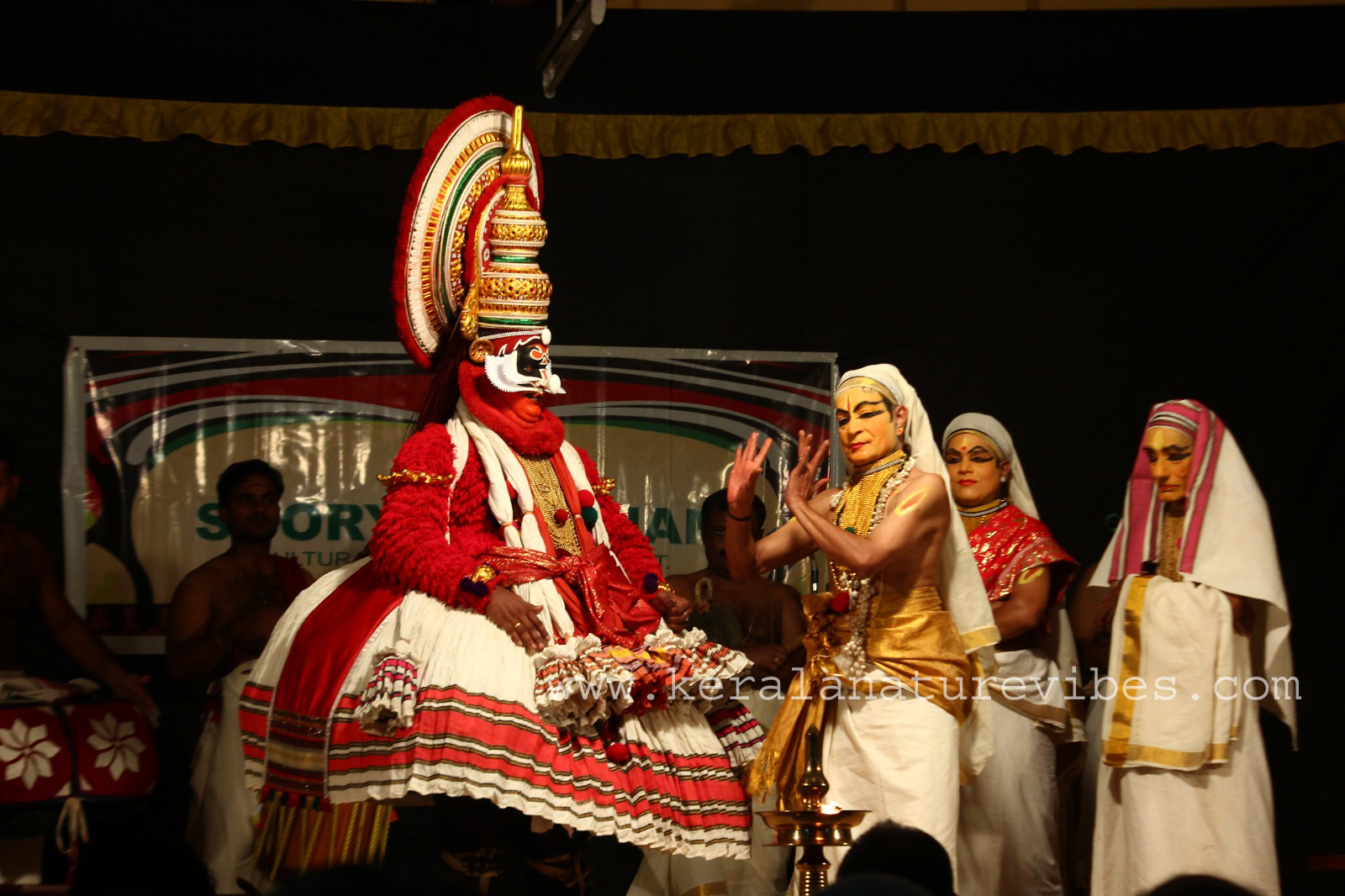
Kathakali is one of Kerala’s most famous classical dance-dramas, recognized in many foreign countries for its distinct style of emotive expression and vibrant storytelling.7 Performers, usually seasoned artists, dedicate themselves to detailed choreography involving elaborate makeup (Veshams), grand costumes, and precise hand gestures (Mudras).6
The hand motions are primarily based on the literature Hastha Lakshana Deepika, which dictates the 24 specific hand movements used to convey story and emotion.8 Themes are predominantly drawn from Hindu epics, revealing legendary stories of the region.7
For travelers seeking authentic engagement, venues are varied. Dedicated cultural centers in popular tourist hubs like Fort Kochi, Munnar, and Thrissur offer daily performances, often including live makeup demonstrations for tourists.9 Many of the performing artists are trained at institutions like the prestigious Kerala Kalamandalam.9
The existence of these structured, commercial shows helps finance and sustain the institutions and artists required to maintain the rigor of the traditional form. However, for a more traditional, locally focused experience, travelers can seek out the Ernakulam Kathakali Club, which stages monthly, night-long plays by leading actors at venues such as the TDM Hall or temple halls in Ernakulam, a feature central to traditional Kathakali practice.9
Mohiniyattam: The Gentle Grace of Lasya
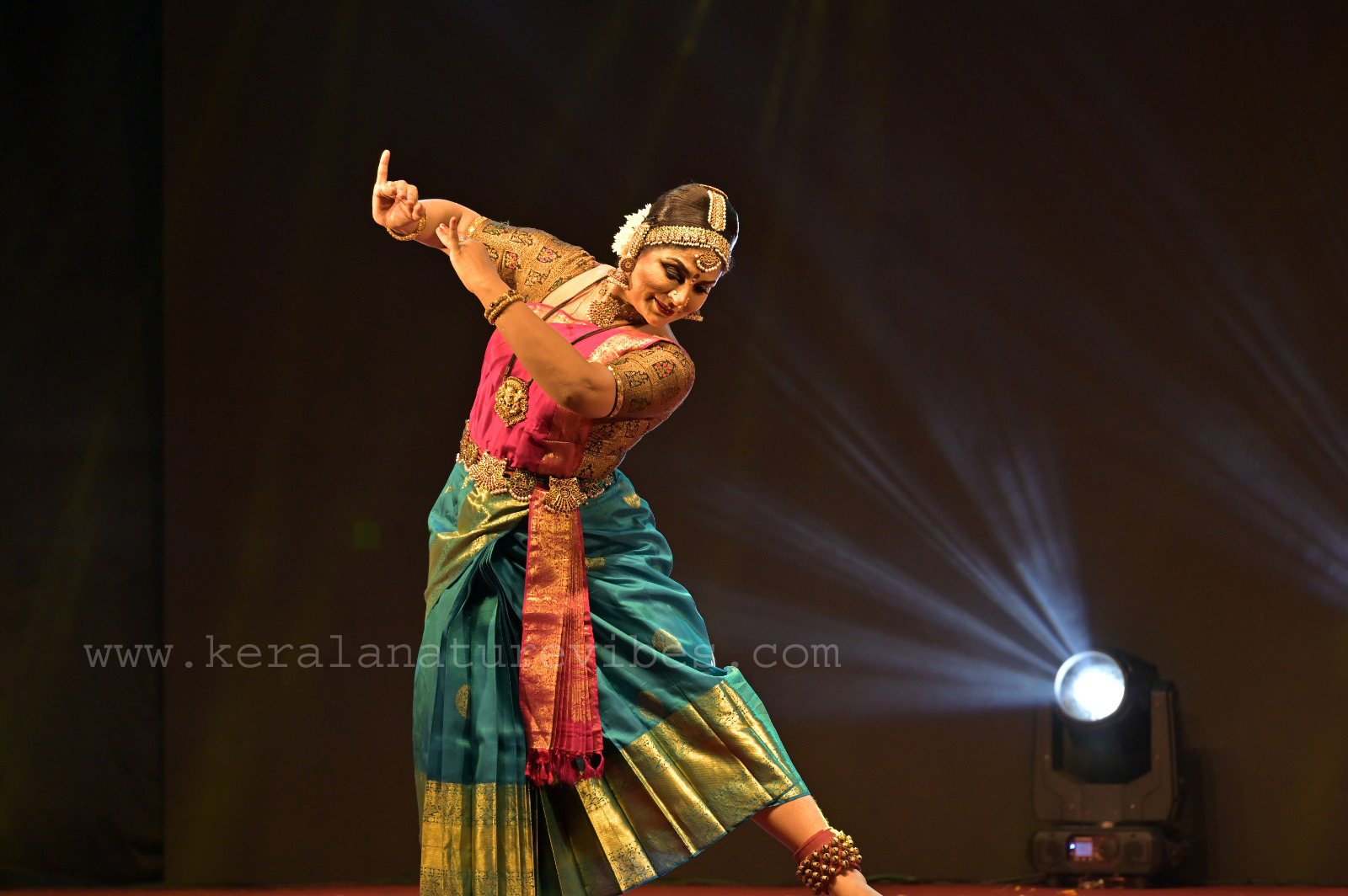
Mohiniyattam, the classical dance of the enchantress (Mohini, an incarnation of Lord Vishnu), evolved in Kerala as a solo performance typically executed by female artists.8 This dance form is rooted in the Lasya style, emphasizing elegant, tender, and distinctly feminine movements characterized by gentle swaying, glides, and up and down movements on the toes, intentionally lacking sharp jerks or quick leaps.8
The movements of Mohiniyattam, flowing and graceful, have been refined over centuries and codified in texts like the Balaramabharatam.11 The visual identity is defined by a basic white or ivory cream traditional sari, embellished with gold-laced brocade, which enhances the graceful motion.8
This visual aesthetic and the fluid movement style evoke the natural environment of Kerala—the soft motion of the backwaters and the graceful sway of coastal palms.
The journey of this art form demonstrates significant cultural resilience. During the 19th and early 20th centuries, Mohiniyattam faced severe societal denigration and a near-banishment under British colonial rule, when traditional classical dances were ridiculed as indecorous.11 Its eventual revival and systematization, championed by patrons like Swati Tirunal Rama Varma and cultural leaders like Vallathol Narayana Menon (who started the Kerala Kalamandalam in the early 20th century), is a powerful testament to the community’s commitment to reclaiming and preserving its heritage.8
Koodiyattam and Chakyarkoothu
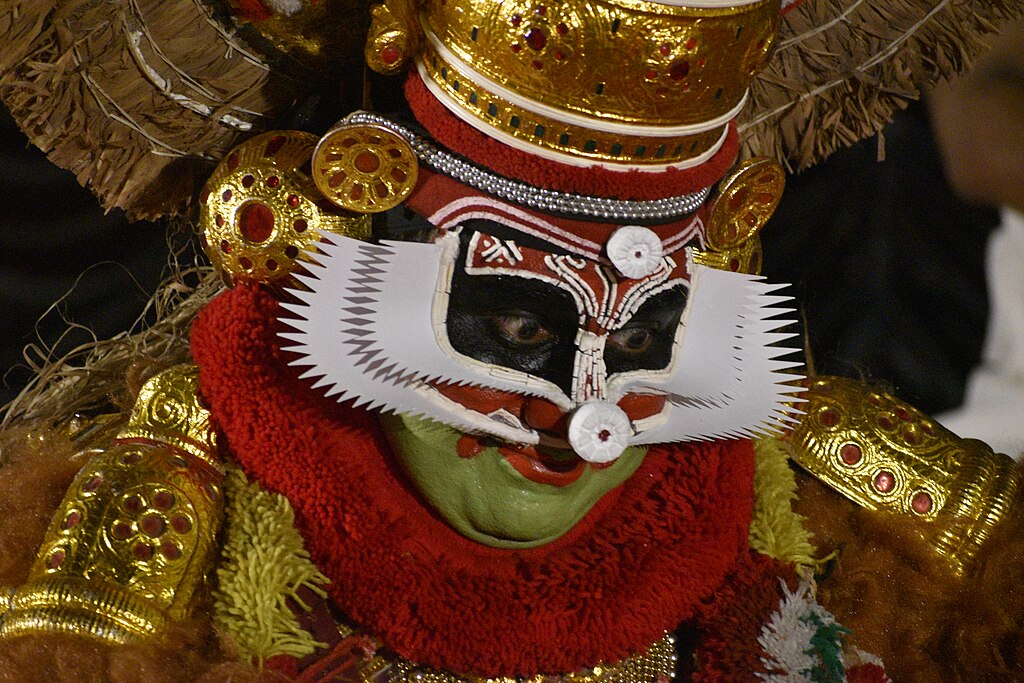
Image: Courtesy of Mr. Arjun S. Raj, Independent Documentary Photographer
Koodiyattam , recognized by UNESCO as a unique art form, represents one of the oldest living forms of Sanskrit theatre in the world.7 Complementing it is Chakyarkoothu, or Koothu, a classical solo theatre art usually performed in the Koothambalam (temple theatre).7
This performance employs complex facial expressions and gestures in line with Natya Shastra guidelines. Chakyarkoothu is unique among the classical arts for its distinct comic element and social satire, which are woven into the narration of epic themes, providing valuable insight into the self-aware nature of Kerala’s traditional society.7
2.2. Ritual and Martial Arts: Embodiment of Indigenous Wisdom
Theyyam: The Sacred Fire of the North (Malabar)
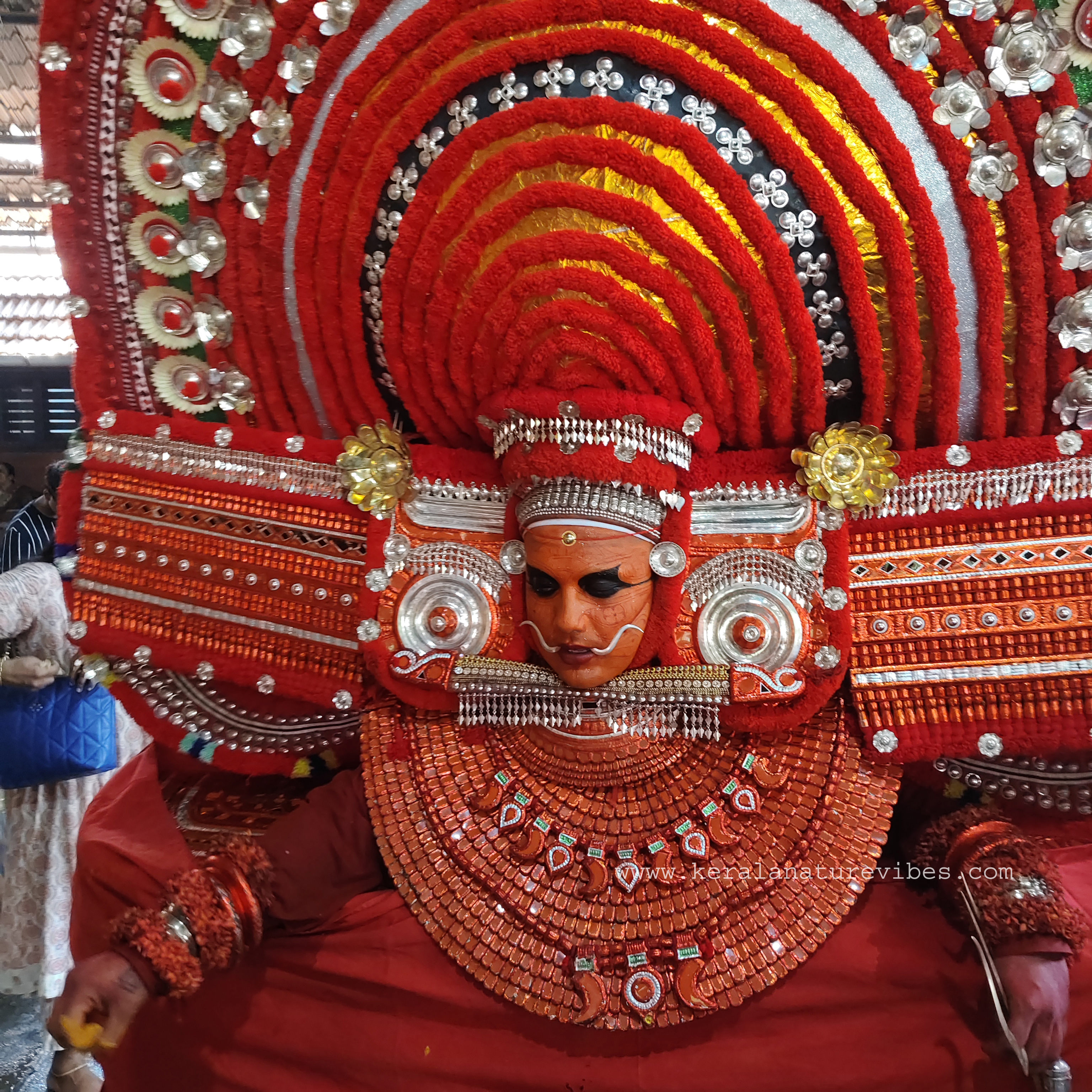
Theyyam is a highly sacred and revered ritual art form, predominantly practiced in North Kerala (Malabar), that transcends mere performance.12 It is believed to be a ritual dance where the designated performer embodies a deity, fulfilling the vows of devotees.12 Theyyam performances are rooted in tribal culture, reflecting a deep, communal connection to village shrines and regional deities.12
The viewing of Theyyam is naturally protected from over-tourism dilution due to its inherent seasonality and deeply sacred context. Performances are primarily held during local festivals and religious events between October and March, coinciding with the pleasant dry season.13 This intense seasonality compels the conscientious traveler to plan their visit around the cultural calendar, ensuring that the viewing experience remains authentic and non-intrusive, aligning the tourist’s schedule with the community’s traditional cycle.14
Padayani: The Rhythmic Cosmology of Central Travancore
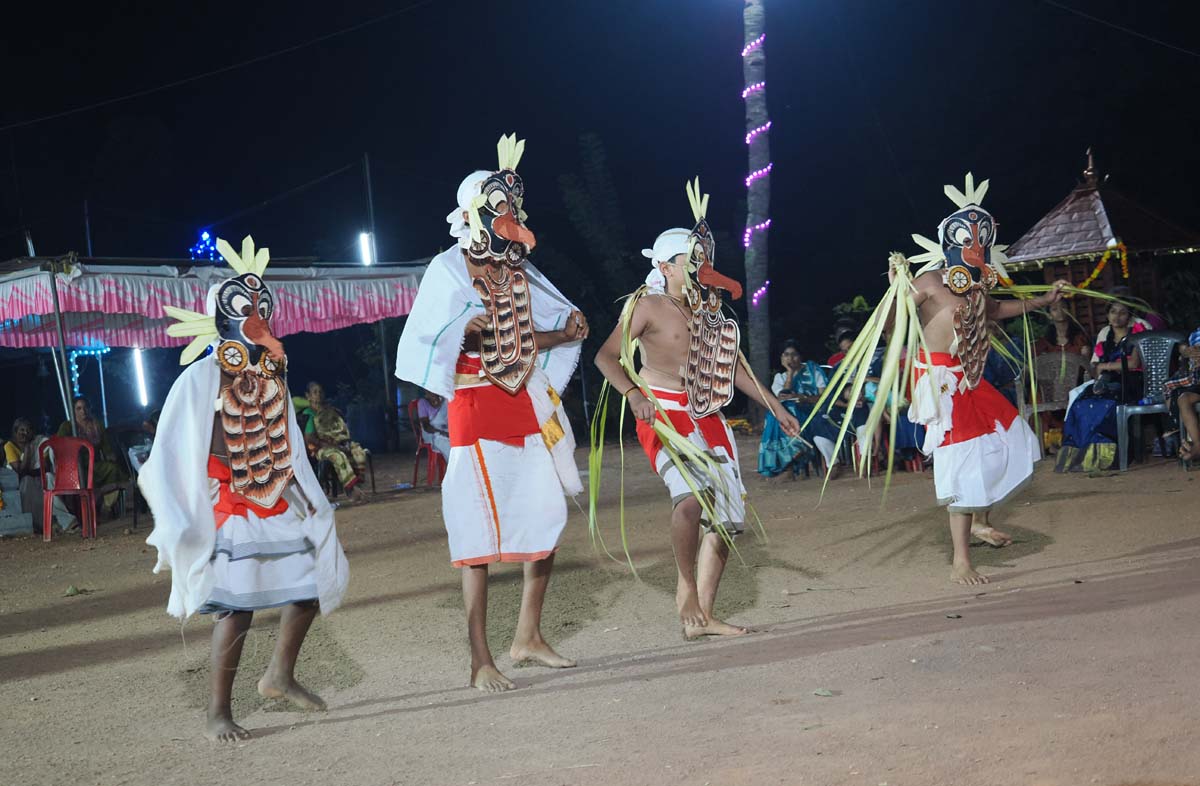
Padayani Performance at Mundan Kavu
Image courtesy: Tonynirappathu, CC BY 4.0 , via Wikimedia Commons
Padayani is an ancient ritual art form performed in the temple precincts of Central Travancore, particularly in the districts of Alappuzha, Kottayam, and Pathanamthitta, embodying a complex synthesis of myth, rhythm, and collective memory.15 Rooted in the worship of Bhadrakali, Padayani integrates massive painted effigies (kolams), ritual percussion, and chant-based performances that narrate cosmic battles between divine and demonic forces.15 Unlike classical stage arts, Padayani remains inseparable from its ritual space, drawing its power from communal participation rather than aesthetic spectacle alone.15
The practice of Padayani is intrinsically resistant to touristic commodification due to its nocturnal timing, extended ritual duration, and strict adherence to temple calendars. Performances occur over multiple nights during specific months in the Malayalam calendar, demanding patience and cultural sensitivity from observers.16 This temporal and spatial specificity ensures that Padayani remains a lived ritual experience rather than a curated display, preserving its sacred rhythm within the social fabric of the temple community.17
Mudiyettu: Ritual Theatre of the Goddess Kali
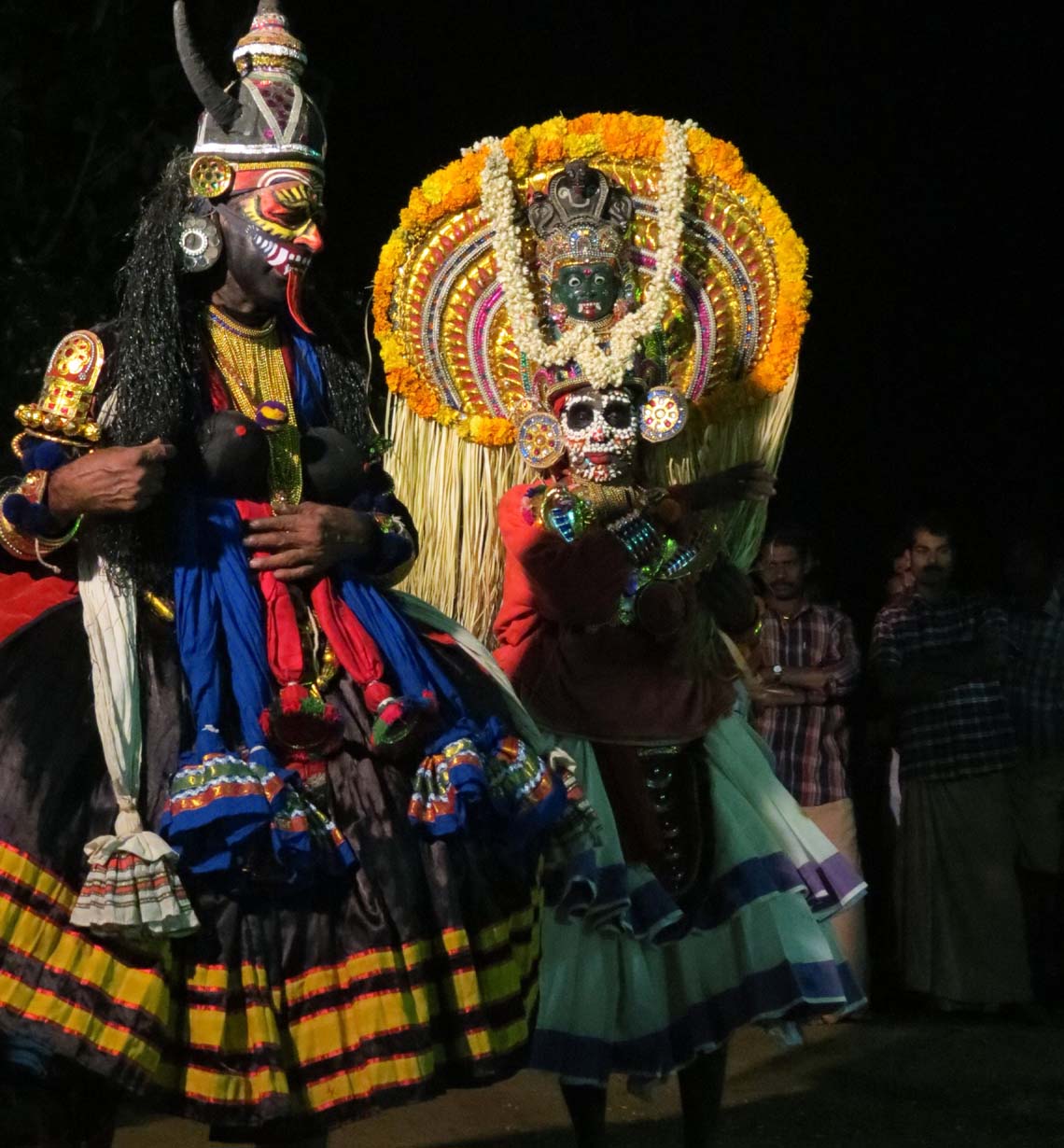
User:Sivavkm, CC BY-SA 3.0 via Wikimedia Commons
Mudiyettu is a ritual theatre tradition of Kerala, formally recognized by UNESCO as an Intangible Cultural Heritage of Humanity, that dramatizes the mythological combat between Goddess Kali and the demon Darika.18 Performed in Bhagavathy temples across central and southern Kerala, Mudiyettu unfolds through elaborate face painting, towering headgear, and symbolic gestures that transform narrative myth into embodied ritual.18 The performance space itself becomes a sacred arena where myth is ritually re-enacted rather than theatrically represented.18
Mudiyettu’s ritual integrity is preserved through its strict observance of temple protocols, seasonal timing, and hereditary performance lineages. Typically performed after the annual temple festival, the ritual extends through the night, culminating in the symbolic destruction of Darika at dawn.19 This structure inherently limits casual spectatorship, ensuring that any viewing remains secondary to worship, thereby safeguarding Mudiyettu from dilution by performative tourism.20
Kalaripayattu: The Mother of Martial Arts
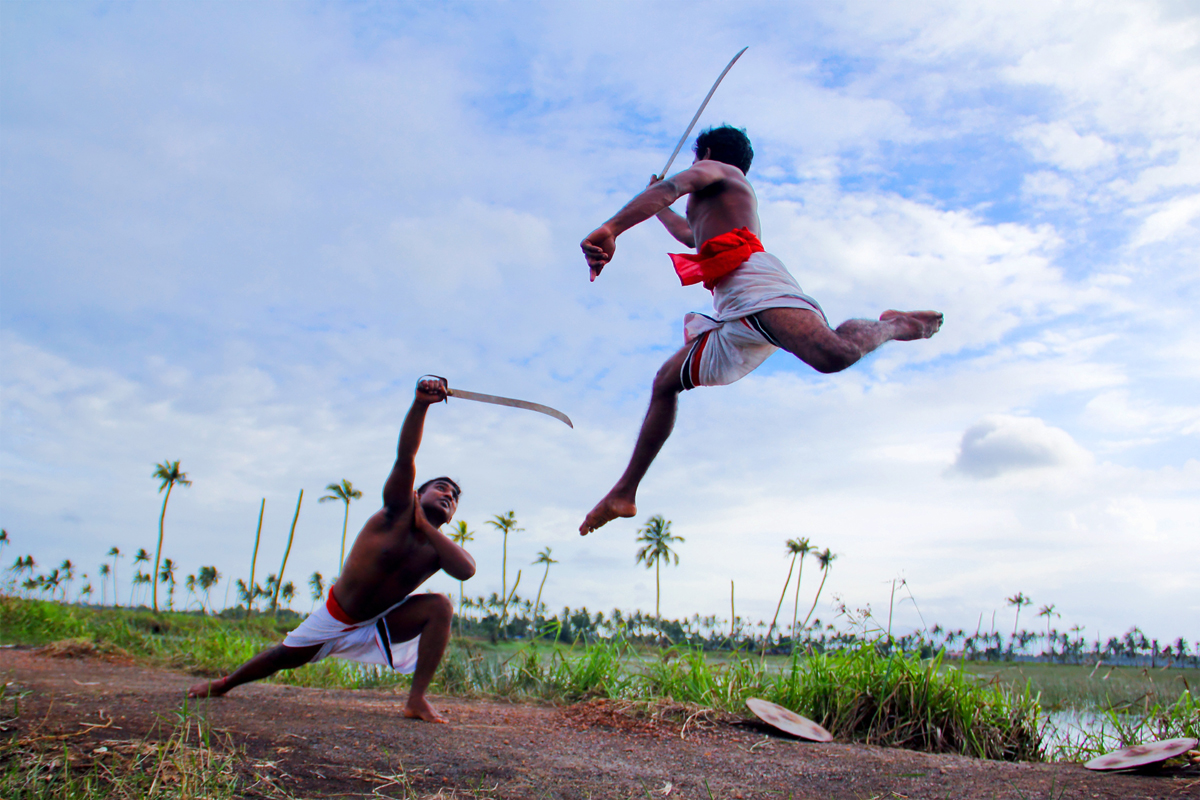
Courtesy: Ginu Plathottam, CC0, via Wikimedia Commons
Kalaripayattu, often referred to simply as Kalari, is the most prominent traditional martial art of Kerala, believed to have originated on the Malabar Coast around the 3rd century BCE.15 The discipline, which means "Practice in the arts of the battlefield," features two main styles: the Vatakkan (Northern) and Tekkan (Southern) forms.7 The Northern style, known for its use of various weapons, has garnered wider publicity, while the Southern style, associated with the legendary Sage Agastya, is considered foundational.7
The profound significance of Kalaripayattu lies in its holistic approach to life and health. The physical training, characterized by full-contact and semi-contact movements, is intrinsically linked to Marmashastram (the knowledge of vital points) and specialized massage techniques.15 This synergy between physical discipline and traditional healing is integral to the indigenous knowledge system and offers a powerful dimension for the eco-wellness tourist, as it links martial strength directly to the Ayurvedic system of healing and body balance.
Cultural anthropologists note that the existence of daily, commercial shows (such as those for Kathakali) helps fund and sustain the institutions (like those trained at Kerala Kalamandalam) necessary to maintain the rigor of the traditional, less frequent, night-long temple performances.
Table 1: Key Performing Arts and Their Cultural Context
| Art Form | Classification | Key Features Relevant to Eco-Tourism | Best Place/Time to Witness |
|---|---|---|---|
| Kathakali | Classical Dance/Drama | Training emphasizes discipline, body control; uses natural expressive techniques (Mudras, facial expressions). | Fort Kochi cultural centers (daily shows); Temple festivals.9 |
| Mohiniyattam | Classical Dance (Lasya) | Solo female performance; gentle, graceful movements; revival driven by cultural preservation efforts. | Kerala Kalamandalam; major cultural centers.11 |
| Theyyam | Folk/Ritual Art | Deep connection to regional village deities and tribal culture; sacred commitment to the land. | Northern Kerala (Kannur/Kasaragod); October to March.13 |
| Kalaripayattu | Martial Art | Origin in Kerala; focuses on balance, physical healing (Marmashastram); often linked to Ayurvedic massage. | Training schools; performances often coupled with classical arts.10 |
III. Architectural and Aesthetic Harmony: The Eco-Conscious Legacy
Kerala’s architectural traditions provide tangible proof that cultural aesthetics and sustainable engineering can coexist seamlessly, offering valuable lessons for modern eco-conscious construction.
3.1. Nalukettu: Indigenous Green Architecture
The traditional residential architectural styles of Kerala, such as the Nalukettu (four-block structure) and the rarer, more complex Ettukettu (eight-block structure), are hallmarks of intelligent passive design.17 The defining feature of these homes is the Nadumuttam, an open space or courtyard in the center, around which rooms are built on all four sides.17
This design feature is not merely aesthetic or communal; it is a sophisticated mechanism for passive climate control. The large open space allows natural sunlight and fresh air to flow freely into the house, creating a constant, gentle breeze that naturally keeps the interior bright and cool despite Kerala’s tropical heat and humidity.17
These structures exemplify a low-carbon footprint by utilizing locally sourced, renewable materials such as stone, clay, and wood.17 The structures are robustly designed to withstand the heavy monsoon rains and incorporate Vastu concepts for positive energy flow.17 The reliance on local materials and traditional knowledge ensures the preservation of Kerala’s rich architectural legacy while simultaneously minimizing environmental impact, making a stay in a heritage Nalukettu homestay an ideal experience for the eco-tourist seeking zero-energy cooling and local material use.17 The complexity of larger structures like the Ettukettu, which required precise planning and skilled craftsmanship, underscores the intellectual depth embedded in this traditional green architecture.18
3.2. Fine Arts Grounded in Nature
Kerala’s fine arts demonstrate a deep commitment to environmental integration through the use of natural materials.
Mural Paintings and Kalam Varakkal
Traditional mural paintings, found on the walls of ancient temples, employ natural, earthy colors.6 These pigments are prepared from organic mediums, often mixed with natural binding agents such as coconut water or neem extract.6 Similarly, Kalam Varakkal is a ritual art where intricate designs are created directly on the ground using colored powders, which are also natural and earthen.6
This reliance on non-toxic, plant-based, and earthen pigments ensures that both the creation and eventual breakdown of the art cause no environmental pollution. This artistic methodology represents a truly sustainable cultural cycle, demonstrating that high artistry can be achieved without compromising the environment. This profound emphasis on non-polluting materials guides the eco-tourist toward appreciating the inherent environmental consciousness in Kerala's aesthetic heritage.
IV. The Culinary Heritage: From Spice Route to Sustainable Plates
Kerala’s cuisine is a defining element of its culture, heavily reliant on rice, coconut, and an aromatic array of spices, creating distinct flavors passed down through generations. 19
4.1. Sadya: The Communal Feast of Abundance
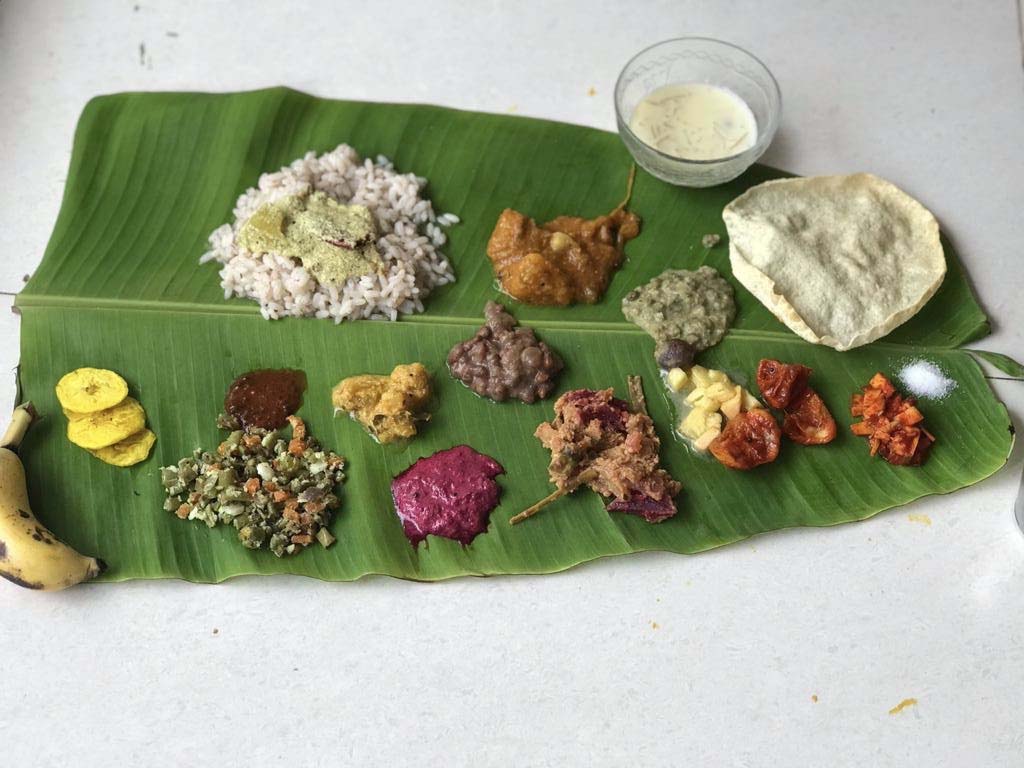
The Sadya (or Sadhya), which literally means ‘communal feast’ or ‘banquet’ in Malayalam, is an elaborate vegetarian meal served traditionally on a banana leaf. 20 It is integral to all major celebrations, including the Onam and Vishu festivals, weddings, and temple feasts. 21 The Sadya is far more than a meal; it is a cultural expression symbolizing abundance, prosperity, and joy. 20
The culinary tradition is a powerful cultural model for zero-waste dining and agricultural celebration. Served entirely on a naturally biodegradable banana leaf, the feast typically consists of dozens of dishes that utilize traditional and seasonal vegetables indigenous to Kerala. 21 Though regional variations exist, the Central Travancore style is renowned for its discipline and tradition, sometimes featuring over 64 items. 21 The meal usually concludes with the chewing of vettila murukkaan (betel leaf with lime and arecanut), which aids in digestion. 21 The use of fresh, local, and seasonal ingredients, along with a focus on vegetarian dishes, minimizes the meal’s carbon footprint and celebrates the agricultural bounty of the land. 20
4.2. Regional Flavors and Global Trade
The Geopolitical Spice Coast
Kerala’s historical and economic significance is inextricably linked to the international spice trade, which dates back to the third millennium BCE. 23 The region’s fertile slopes and monsoon climate foster the growth of highly prized spices, including cardamom, cinnamon, cloves, ginger, and the famously valuable black pepper. 23 The global pursuit of these commodities was a driving force behind European exploration; Vasco da Gama’s arrival in Calicut in 1498 marked the beginning of intense competition among the Portuguese, Dutch, and British for control over the lucrative Malabar Coast trade. 23 This historical trajectory confirms that Kerala’s indigenous agricultural biodiversity fundamentally influenced global history.
For eco-tourists, the Spice plantation tours in the Western Ghats offer an immersive educational experience. Travelers can observe how pepper vines climb trees, or how cardamom grows, gaining botanical insights into the sources of flavors typically recognized only when dried and packaged. 24 This form of tourism directly supports the local agricultural economy and reinforces the importance of preserving the fertile landscape.
Malabar Cuisine: A History of Fusion
The distinct cuisine of North Kerala, known as Malabar cuisine, evolved under centuries of unique cultural confluence. This region had strong, sustained trade links with Arab and Persian merchants, leading to a culinary history distinct from that of the temple-centered Travancore region. 25 This interaction resulted in a mesmerizing blend of local spices, coconut, and an array of seafood and meats.
Malabar cuisine boasts culinary masterpieces such as Malabar Dum Biryani, a preparation of layered rice, meat, and intricate seasoning steamed to perfection. 27 It also features unique traditional rice-based flatbreads like Pathiri (thin rice flour flatbread popular among the Muslim community) and the bowl-shaped Appam. 28 This cuisine vividly illustrates how isolated historical trade links can create highly localized, fusion dishes that utilize indigenous materials, demonstrating culinary globalization centuries before the term was coined. 27
4.3. Culinary Eco-Niches and Wellness
Beyond the main meals, Kerala offers specialized culinary products that align with eco-tourism values. The traditional beverage, Toddy (a naturally fermented palm sap), is valued by visitors for its organic and preservative-free qualities. 29 Experiencing toddy provides cultural immersion into Kerala’s rural lifestyle and traditional crafts. 29
Furthermore, responding to the global demand for sustainable gastronomy, high-end eco-resorts have begun focusing on hyper-local, plant-based cuisine. These menus feature innovative dishes using millets, cashew cheese, and organic curries, offering a low-carbon dining experience that attracts conscious travelers. 30 This development highlights the successful translation of Kerala's plant-rich traditions into a contemporary, sustainable wellness model.
V. Customs, Attire, and Hospitality: The Ethical Traveler’s Guide
5.1. Traditional Attire: Purity and Practicality
Kerala’s traditional attire is marked by simplicity, elegance, and practical adaptation to the climate. For men, the staple is the Mundu, a rectangular piece of cloth wrapped around the waist and legs. 32 For women, the traditional wear is the two-piece Set Mundu, comprising a lower garment (Mundu) and an upper piece (Neriyathu) worn over the blouse, similar to a saree. 32
The traditional colors are typically white, cream, or off-white, often featuring the distinctive gold Kasavu border. 33 These light colors and the handloom weaving techniques are not just cultural symbols of purity and elegance; they serve a vital, functional purpose. They maximize breathability and comfort in the humid tropical environment, demonstrating how cultural practice is inextricably linked to climate adaptation and sustainable material choice. 33
5.2. The Malayali Welcome: Hospitality with Soul
Kerala’s hospitality culture, often referred to as the Malayali way, is renowned for its genuine warmth and personalized care. Visitors are greeted not with rehearsed lines, but with authentic smiles and gestures, often including an immediate offer of tender coconut water or fresh Cardamom chai. 34 This approach prioritizes service "with soul," contrasting sharply with the cold efficiency often associated with luxury hospitality elsewhere. 34
Hospitality often functions as a respected family profession, resulting in staff (from chefs to receptionists) who have deep, generational experience and pride in their work. 34 A housekeeper might notice wet shoes and spontaneously leave a towel by the door; a waiter might suggest a dish because it reminds him of his mother’s cooking. 34 This focus on human connection and deeply ingrained pride in their service creates an authentic and unforgettable experience, which is a critical differentiator in attracting high-value, cultural tourists.
5.3. Responsible Interaction: Essential Etiquette for the Eco-Tourist
For the ethical traveler, respectful engagement requires adherence to local customs and a commitment to ecological stewardship.
Dining Rituals and Etiquette
When participating in a traditional feast like the Sadya, specific customs must be observed. Food is traditionally eaten using only the hand (usually the right one).35 It is considered highly rude to share food from the same plate, even within couples. Guests are required to wash their hands both before and after the meal.35 After finishing the Sadya, guests must dispose of leftovers by folding the banana leaf upon which they ate and placing it in a designated area, rather than leaving it at the serving place.35 Furthermore, wasting food is deeply discouraged in traditional settings.35
Respect for Sacred and Natural Sites
Modesty and respect are paramount when visiting religious sites. At temples, mosques, or churches, modest dress is required; women must cover their shoulders and legs, and men may sometimes be required to remove their shirts at certain Hindu temples.36 Temple-specific rules, such as not carrying leather items or using mobile phones inside, must be strictly followed.36
Ecological stewardship is equally mandatory for the eco-tourist. This includes conserving energy and water resources, avoiding littering, and ensuring that waste is disposed of properly.37 When exploring the sensitive backwaters, travelers should utilize products that minimize chemical residue, such as marine-safe sunscreens and natural, citronella-based bug repellents.38 Feeding wildlife is strongly discouraged as it alters their natural behavior patterns and can be detrimental to their health.38
Community Dignity
A core principle of responsible tourism in Kerala involves recognizing the dignity of the local people. The farmers, fishermen, and families living along the backwaters are not tourist attractions. The cultural practice mandates that travelers must always ask permission before taking photographs of people.36 This policy reinforces the idea that local inhabitants are valued stakeholders and collaborators in the tourism process, not mere props for documentation, which is vital for ethical travel.
Table 2: Cultural Ethics and Eco-Tourism Guidelines
| Focus Area | Responsible Traveler Action | Cultural/Ecological Rationale |
|---|---|---|
| Backwaters & Wildlife | Use marine-safe products; avoid feeding animals; embrace quiet.38 | Protects the unique brackish ecosystem (Ramsar sites) and sensitive aquatic life.2 |
| Food & Consumption | Do not waste food; utilize local/organic suppliers.30 | Sadya tradition emphasizes abundance, gratitude, and minimizes carbon footprint (plant-based).20 |
| Community Interaction | Always ask permission before photographing people.38 | Respects local privacy, dignity, and traditions (People aren't props). |
| Visiting Sacred Sites | Dress modestly; follow specific temple rules (e.g., no leather, no phones).36 | Shows deep respect for local religious and cultural sentiments. |
| Accommodation | Choose resorts using local materials, solar power, and recycling sewage water.31 | Supports the indigenous architectural legacy (Nalukettu) and minimizes carbon footprint. |
VI. Festivals: The Rhythm of Community and Harvest
Kerala’s calendar is punctuated by vibrant festivals that are essential for experiencing the state’s cultural dynamism and social harmony.
6.1. Onam: The State Festival of Harvest and Equality
Onam is the most famous state festival, celebrated over ten days in the Malayali month of Chingam (August/September).22 It marks the annual harvest and the mythological homecoming of the benevolent King Mahabali, whose reign is cherished as a golden era of prosperity and equality.22 Key attractions include the elaborate Pookalam (flower carpet), the grand Onasadya (feast), and the Kaikottikkali dance (Thiruvathirakkali), a graceful group dance performed by women.7
Crucially, Onam embodies the principle of inclusivity, transcending religious boundaries to celebrate a shared heritage of prosperity, community bonding, and justice.40 This unified celebration of shared values is a foundational component of Kerala’s unique social harmony.
6.2. Vallamkali (Snake Boat Races): Performance on the Waterways
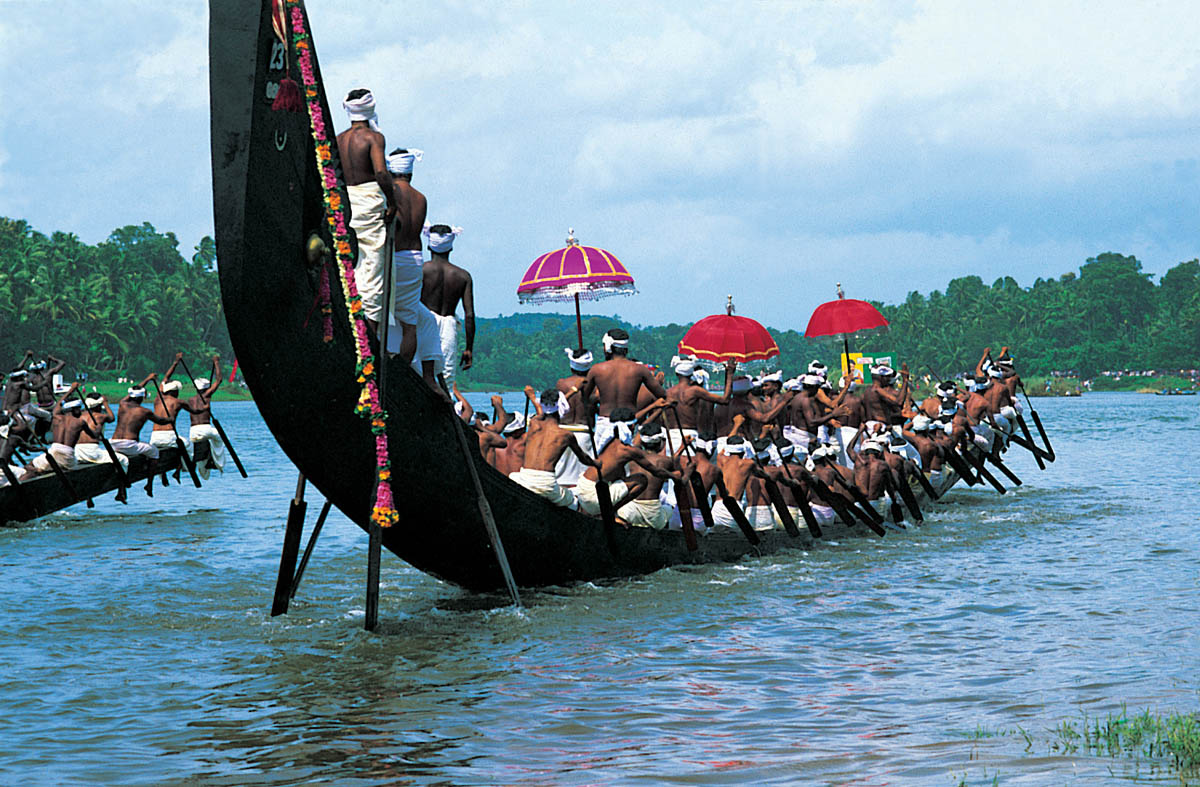
Courtesy: Anjali1840723, CC BY-SA 4.0 via Wikimedia Commons
The Vallamkali, or Snake boat races, are thrilling spectacles held during the monsoon season, such as the Nehru Trophy Boat Race and the revered Aranmula Snake Boat Race.12 These races feature long, graceful boats powered by dozens of rowers, representing an extraordinary display of coordination and community spirit.12
This major cultural performance is inherently dependent on the natural environment. The races are intrinsically tied to the backwaters, a labyrinthine system of interconnected lakes and canals that include vital Ramsar Wetland ecosystems like Vembanad-Kol and Ashtamudi.2 The cultural tradition thus serves as a barometer of the natural environment: supporting these events ethically means recognizing and prioritizing the need to protect the ecological integrity of the waterways—establishing a direct link between community sport, cultural heritage, and ecological conservation.
6.3. Diversity in Celebration
Kerala exemplifies unity in diversity, celebrating major festivals across multiple faiths year-round.42 Alongside Hindu festivals like Vishu (New Year), Thiruvathira, and the spectacular Thrissur Pooram (noted for its decorated elephants and traditional percussion)12, Christian holidays such as Christmas and Easter are widely celebrated.43 Islamic festivals, including Bakrid (Eid-ul-Adha) and Idul Fitr, are also integral to the cultural landscape, featuring community feasts and celebrations.42 This multi-faith festival calendar demonstrates the deep-rooted tradition of communal harmony that underpins Kerala’s societal structure.
References
- Ramsar Convention Secretariat. The Ramsar Convention on Wetlands: Global Wetland Outlook. (Official documentation on Ramsar wetlands including Vembanad–Kol and Ashtamudi.)
- Government of India. Ministry of Environment, Forest and Climate Change. National Wetland Conservation Programme.
- Kerala State Biodiversity Board. Biodiversity Strategy and Action Plan for Kerala.
- Gadgil, Madhav & Guha, Ramachandra. This Fissured Land: An Ecological History of India. Oxford University Press.
- Miller, Daniel. Material Culture and Mass Consumption. Blackwell. (Anthropological understanding of material culture and everyday practices.)
- Freeman, J. R. Performing Possession: Ritual and Consciousness in the Theyyam Complex of North Malabar. Oxford University Press.
- Kurup, K. K. N. Theyyam: A Ritual Dance of North Malabar. Kerala Folklore Academy.
- Menon, A. Sreedhara. A Survey of Kerala History. DC Books.
- Logan, William. Malabar Manual. Government Press, Madras. (Colonial-era documentation of ecology, economy, and society.)
- Government of Kerala. Department of Tourism. Responsible Tourism Mission – Policy Documents.
- UNESCO. Culture: Urban Future – Global Report on Culture for Sustainable Urban Development.
- Nehru Trophy Boat Race Society. Official documentation on Vallamkali traditions and community organization.
- Freeman, Rich. “The Cultural Logic of South Indian Temple Festivals.” Journal of Ritual Studies.
- Zarrilli, Phillip B. When the Body Becomes All Eyes: Paradigms of Consciousness in Kalaripayattu. Oxford University Press.
- Kerala Folklore Academy. Folk Arts of Kerala: Documentation Series.
- Narayanan, M. G. S. Cultural Symbiosis in Kerala. Kerala Historical Society.
- UNESCO. Ethical Principles for Sustainable Tourism.
- Kerala State Pollution Control Board (KSPCB). Guidelines on waste management, STPs, and ETPs in tourism infrastructure.
- Food and Agriculture Organization (FAO). Traditional Food Systems and Sustainable Diets.
- Appadurai, Arjun. Gastro-Politics in Hindu South Asia. American Ethnologist.
- Fuller, C. J. The Camphor Flame: Popular Hinduism and Society in India. Princeton University Press.
- Government of Kerala. Department of Cultural Affairs. Onam Festival: Cultural Significance and Social Dimensions.
- Dale, Stephen. Islamic Society on the South Asian Frontier. Oxford University Press.
- Bayly, Susan. Saints, Goddesses and Kings: Muslims and Christians in South Indian Society. Cambridge University Press.
- Ministry of Tourism, Government of India. Eco-Tourism Guidelines and Certification Standards.
- Sharma, P. V. Charaka Samhita: Text with English Translation. Chaukhambha Orientalia.
- Ministry of AYUSH, Government of India. Ayurveda – The Science of Life.
- Wujastyk, Dominik. The Roots of Ayurveda. Penguin Classics.
- Van Rheede tot Drakenstein, Hendrik. Hortus Malabaricus. Amsterdam (1678–1693).
- Kerala Forest Research Institute (KFRI). Studies on medicinal plants and biodiversity conservation in the Western Ghats.
- Government of Kerala. Department of Ayurveda, Yoga & Naturopathy. Good Practice Guidelines for Ayurvedic Resorts.
- United Nations World Tourism Organization (UNWTO). Tourism and Culture Synergies.
- Smith, Valene L. Hosts and Guests: The Anthropology of Tourism. University of Pennsylvania Press.
- Bourdieu, Pierre. Outline of a Theory of Practice. Cambridge University Press.
- Government of India. Ministry of Culture. Guidelines for Protection of Intangible Cultural Heritage.