Sabarimala: Pilgrimage, Landscape, and the Meaning of Spiritual Tourism in Kerala
Credit: Vinayaraj, CC BY-SA 4.0 (license), via Wikimedia Commons
PART I – The Place, the Deity, and the Pilgrimage Idea
1. Sabarimala as a Sacred Landscape
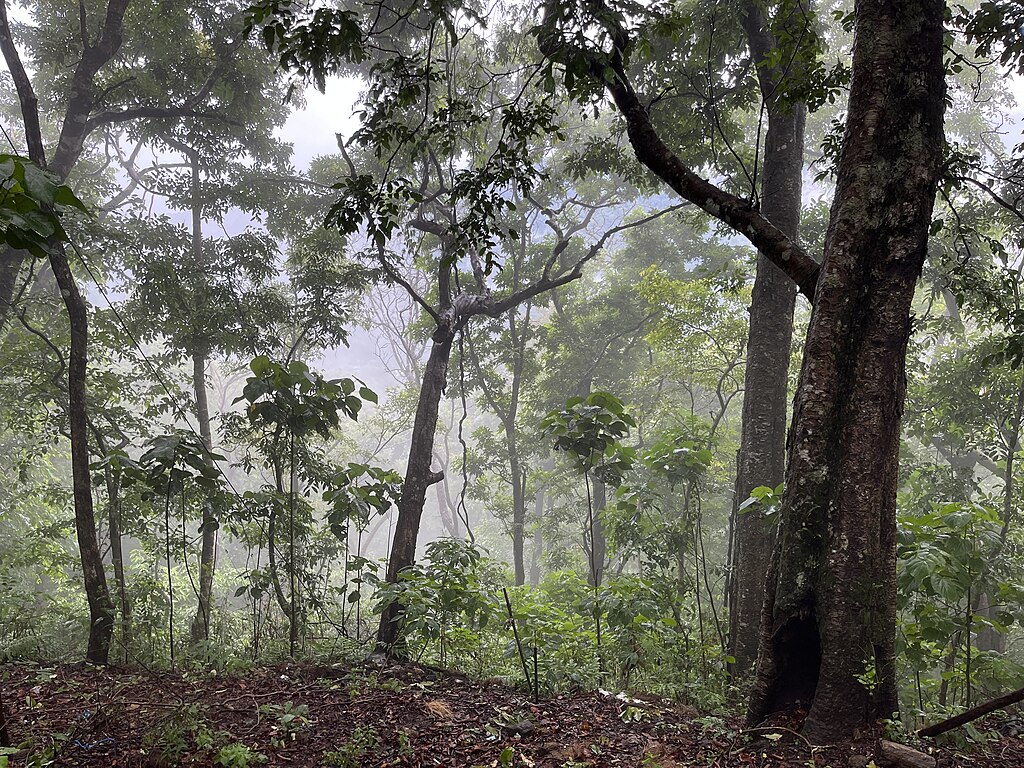
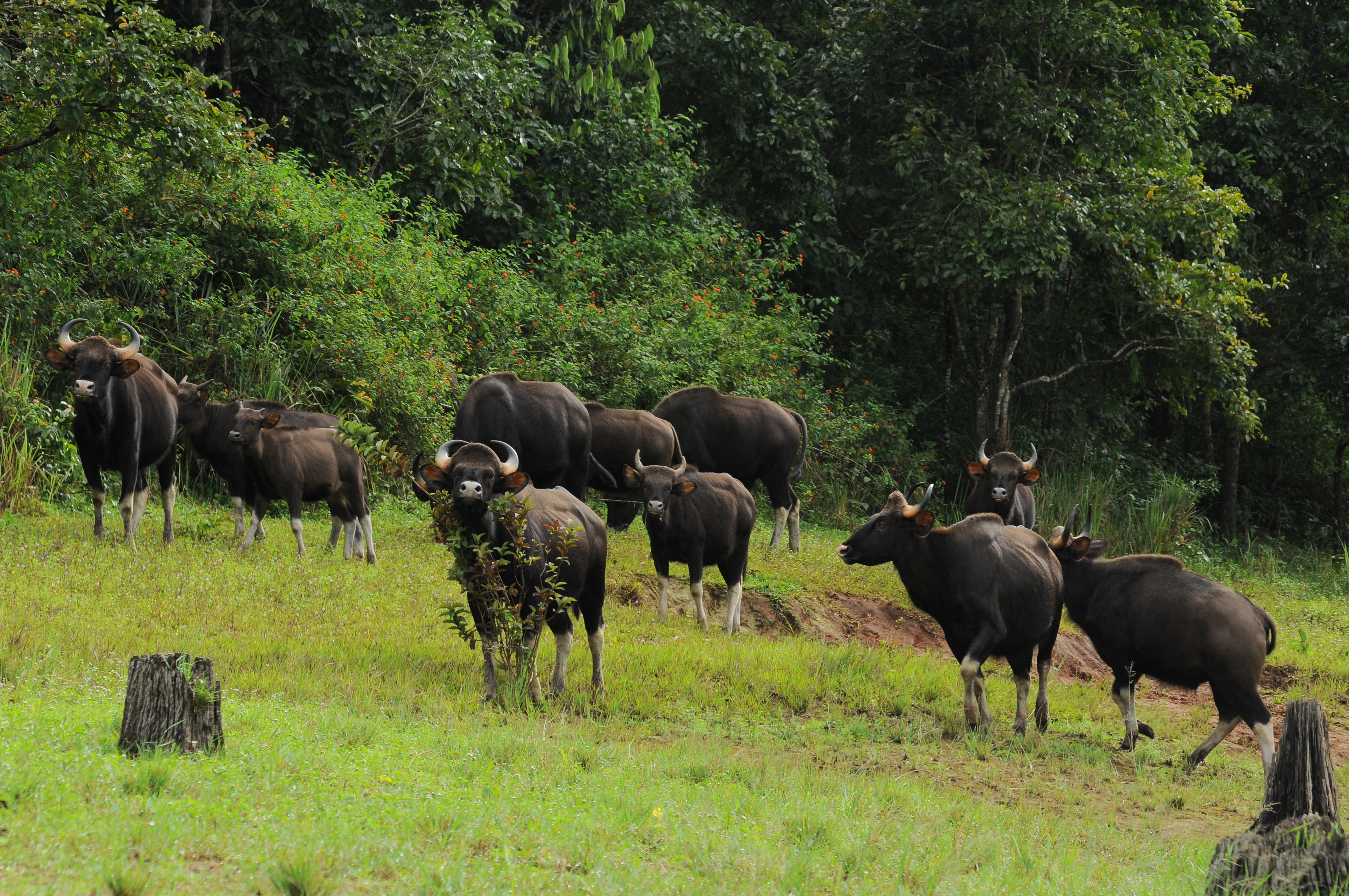
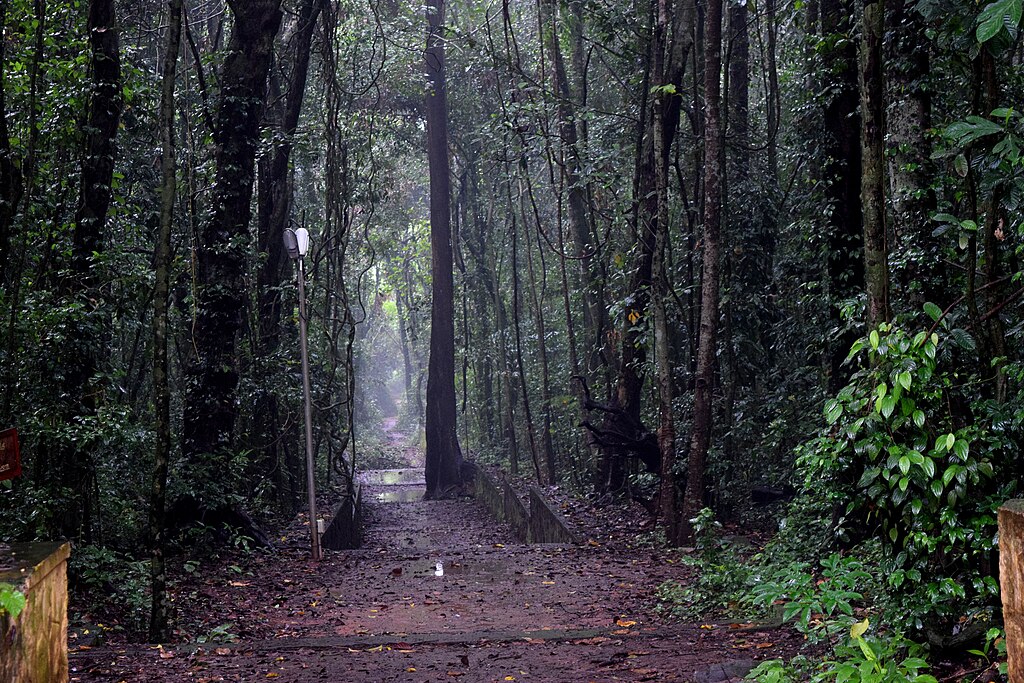
Sabarimala is not merely a temple situated on a hill; it is a sacred landscape shaped by forest, river, memory, and movement. Located deep within the Western Ghats in Kerala’s Pathanamthitta district, the shrine of Lord Ayyappa stands at an elevation of about 1,260 feet above sea level, surrounded by dense tropical forest that now forms part of the Periyar Tiger Reserve [1]. The physical remoteness of Sabarimala is not incidental. It is central to the spiritual logic of the pilgrimage.
Unlike temple towns where the sacred is approached through urban ritual space, Sabarimala demands movement through nature. The devotee must walk, climb, endure, and wait. The pilgrimage unfolds across rivers, forest paths, rocky ascents, and temporary settlements that appear only during the season. In this sense, Sabarimala represents an older South Asian idea of sacred geography, where divinity is encountered through bodily discipline and spatial transition rather than instant access.
From the banks of the Pamba River to the final ascent to the sannidhanam, the journey itself becomes an act of worship. The temple is not the sole sacred point; the entire route is ritually charged. This is why Sabarimala resists easy classification as a tourist destination in the conventional sense. It is better understood as a lived pilgrimage ecosystem, where belief, environment, and social practice intersect.
2. Lord Ayyappa and the Idea of Renunciation
At the heart of the Sabarimala pilgrimage is Lord Ayyappa, a deity whose mythological origins and ethical symbolism distinguish him from many other Hindu gods. According to popular tradition, Ayyappa is the son of Shiva and Mohini (the female form of Vishnu), born to defeat the demoness Mahishi and restore cosmic balance [2]. Yet the theological importance of Ayyappa lies less in the mythic battle and more in what he represents: restraint, discipline, and renunciation.
Ayyappa is worshipped as a naisthika brahmachari — a perpetual celibate. This idea is symbolically reinforced through the strict observances associated with the pilgrimage. Devotees undertake a forty-one-day vratham (austerity period), marked by celibacy, abstinence from alcohol and meat, simplicity of dress, and egalitarian conduct. During this period, the devotee addresses others as Swami or Ayyappa, temporarily dissolving social hierarchies of caste and class.
This ethic of self-discipline gives Sabarimala its distinct spiritual tone. The pilgrimage is not about seeking prosperity or personal boons alone; it is framed as a moral training ground. Endurance, patience, humility, and collective responsibility are as important as ritual correctness. In this sense, Sabarimala aligns with older ascetic traditions within Indian religiosity, where the body becomes the primary site of spiritual work.
3.The Legend of Lord Ayyappa: The Spiritual Core of Sabarimala
Any journey to Sabarimala is incomplete without understanding the sacred legend of Lord Ayyappa, whose life and ideals form the spiritual foundation of this pilgrimage. According to tradition, Lord Ayyappa is the son of Lord Shiva and Mohini, the divine feminine form of Lord Vishnu. Born as Manikandan, he was discovered by the Pandalam king and raised as a prince, destined from birth to restore cosmic balance.
The Sabarimala pilgrimage commemorates Ayyappa’s victory over the demoness Mahishi, symbolising the triumph of dharma over chaos and ego. After fulfilling his divine mission, Ayyappa chose to remain at Sabarimala as a Naishtika Brahmachari, a celibate yogi, guiding devotees on the path of discipline, equality, and self-purification.
The traditional Vratham of forty-one days, the chant “Swamiye Saranam Ayyappa,” and the arduous forest path together transform the pilgrimage into an inward journey. Sabarimala thus stands not merely as a temple, but as a lived spiritual philosophy that dissolves social divisions and emphasises humility, restraint, and surrender.
4. The Pilgrimage Community and Shared Identity
One of the most remarkable aspects of the Sabarimala pilgrimage is the temporary community it creates. During the pilgrimage season, millions of devotees from across Kerala and other parts of India enter a shared ritual identity. Individual names, professions, and social status recede, replaced by the collective identity of Ayyappa Swamis.
Anthropologically, this phenomenon resembles what Victor Turner described as communitas — a liminal social state formed during rites of passage. In Sabarimala, the forest paths, resting camps, and queue complexes become spaces where strangers share food, water, songs, and hardship. This collective experience is reinforced through ritual practices such as group chanting, shared climbing of the hill, and mutual assistance during physically demanding stretches of the journey.
Importantly, Sabarimala’s pilgrimage tradition also includes elements of cultural syncretism. The ritual remembrance of Vavar, a Muslim figure associated with Ayyappa in local lore, and the presence of the Vavar mosque at Erumeli reflect a layered religious memory rooted in regional history rather than doctrinal boundaries [3]. This aspect has long attracted the attention of folklorists and social historians studying Kerala’s plural devotional practices.
5. From Mythic Hill to Mass Pilgrimage
While the origins of Sabarimala lie in legend and local worship, its transformation into one of the largest annual pilgrimages in the world is a relatively recent historical development. Until the late nineteenth and early twentieth centuries, the pilgrimage was largely regional, undertaken by small groups who travelled on foot through forest routes. Colonial-era references indicate that the shrine was periodically abandoned and revived, often affected by forest conditions, disease outbreaks, and political instability.
The expansion of road networks, state involvement in temple administration, and modern communication systems gradually transformed Sabarimala into a mass pilgrimage centre in the twentieth century. The establishment of the Travancore Devaswom Board and the introduction of organised facilities at Pamba and Nilakkal played a key role in accommodating the growing number of pilgrims [4].
Today, during the Mandalam–Makaravilakku season, Sabarimala witnesses footfall running into several tens of millions across weeks, placing immense pressure on infrastructure and ecology [5]. This scale has fundamentally altered the character of the pilgrimage, raising complex questions about sustainability, governance, and the meaning of spiritual travel in an age of mass mobility.
6. Sabarimala and the Question of Spiritual Tourism
The growing global interest in spiritual tourism has brought new attention to Sabarimala. Unlike wellness retreats or heritage temple circuits, Sabarimala does not easily lend itself to casual visitation. Its rituals are demanding, its environment fragile, and its cultural codes deeply embedded in lived tradition.
Yet, Sabarimala is increasingly discussed within tourism discourse because it exemplifies a form of travel where spiritual intent, bodily effort, and ecological context are inseparable. For Kerala, a state that actively promotes nature-based and cultural tourism, Sabarimala presents both an opportunity and a challenge. How does one interpret, manage, and present a pilgrimage that is not designed for spectators but for participants?
This question becomes central to understanding Sabarimala not just as a religious site, but as a case study in responsible spiritual tourism. The answers lie not only in policy documents or visitor numbers, but in the deeper cultural logic of the pilgrimage itself — a logic that insists that the path matters as much as the destination.
PART II – Sacred Time, Pilgrimage Routes, and the River Pamba
7. Sacred Time: Pilgrimage Seasons and the Ritual Calendar
The rhythm of the Sabarimala pilgrimage is governed not only by geography but by sacred time. Unlike temples that remain continuously open to large numbers of devotees, Sabarimala follows a tightly regulated ritual calendar that determines when the pilgrimage may be undertaken. The most significant period is the Mandalam–Makaravilakku season, which begins in mid-November and concludes in mid-January, aligning with the Malayalam month of Vrischikam and the solar transition of Makara Sankranti [6].
The forty-one-day Mandalam period holds particular importance because it mirrors the traditional duration of the vratham observed by pilgrims. For many devotees, the pilgrimage is not considered valid unless this preparatory discipline is completed. The culmination of the season, Makaravilakku, is marked by the appearance of the sacred flame on the distant hill of Ponnambalamedu, a moment that carries immense symbolic and emotional weight for pilgrims [7].
Apart from this main season, Sabarimala is also opened for shorter periods during the first five days of every Malayalam month and during specific festivals such as Vishu. These openings, however, attract fewer pilgrims and lack the intense collective atmosphere of the Mandalam season. The contrast between peak and off-peak periods highlights how sacred time structures not only religious observance but also crowd dynamics, infrastructure planning, and ecological stress.
From the perspective of spiritual tourism, this seasonal concentration presents both a challenge and a lesson. Sabarimala teaches that spiritual journeys are not infinitely flexible experiences to be scheduled at convenience; they are bound to cultural rhythms that demand patience and preparation. Understanding this temporal discipline is essential for anyone seeking to engage with the pilgrimage meaningfully.
8. Traditional and Modern Routes to Sabarimala
The approach to Sabarimala is as significant as the destination itself. Traditionally, pilgrims reached the shrine on foot through forest paths that connected villages, shrines, and resting points across the hills of central Kerala. Among these, the Erumeli route holds special ritual importance. Beginning at Erumeli, pilgrims visit the Vavar mosque and associated shrines before proceeding through dense forest terrain towards Pamba, reenacting a journey remembered in oral tradition [8].
The Erumeli–Pamba route is often described as the most demanding yet spiritually rewarding path. Stretching across rugged terrain, it reinforces the idea that hardship is intrinsic to devotion. Even today, many pilgrims consciously choose this route despite the availability of easier alternatives, seeing physical exhaustion as a form of offering.
Modern infrastructure has introduced additional access routes, including those via Vandiperiyar, Chalakayam, and Nilakkal. Roads now bring pilgrims close to Pamba, where vehicular access ends and the final ascent begins. From Pamba, pilgrims undertake the steep climb to the sannidhanam, passing through points such as Sabaripeedam and Marakkoottam [9].
While these routes have improved accessibility and safety, they have also altered the pilgrimage experience. The transition from long forest treks to regulated pathways, queue complexes, and surveillance systems reflects the broader transformation of Sabarimala into a managed pilgrimage space. This shift raises important questions about how modern logistics can coexist with the traditional ethos of renunciation and endurance.
9. The Final Ascent and the Symbolism of Movement
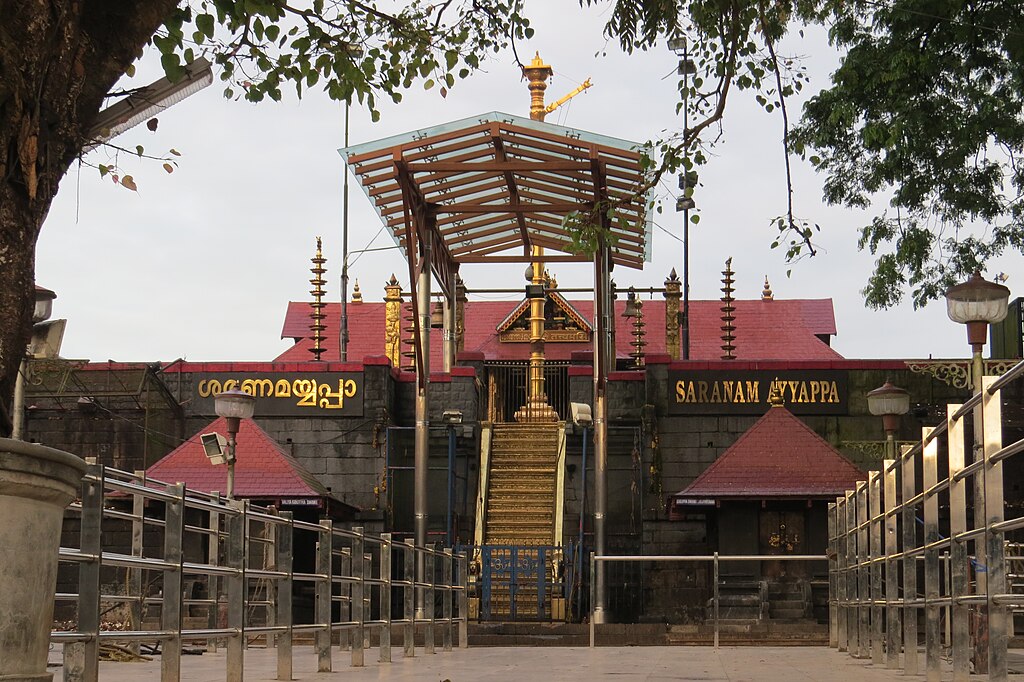
The journey from Pamba to the hill shrine is the most symbolically charged segment of the pilgrimage. Pilgrims bathe in the Pamba River, change into clean attire, and begin the ascent barefoot, carrying the Irumudi kettu on their heads. This final stretch condenses the physical, emotional, and spiritual dimensions of the pilgrimage into a single act of movement.
Along the path, pilgrims chant sacred names, assist one another across steep inclines, and pause at designated points for rest and prayer. The climb culminates at the sacred eighteen steps, which lead directly to the sanctum. These steps are traditionally associated with layered symbolic meanings, often interpreted as representing human senses, qualities, or stages of spiritual discipline [10].
What is striking here is the emphasis on bodily engagement. Unlike temple rituals where priests perform actions on behalf of devotees, Sabarimala requires each pilgrim to enact devotion physically. The body becomes the medium through which belief is expressed, making the pilgrimage an embodied spiritual practice rather than a passive observance.
10. The Pamba River: Ritual Axis and Ecological Core
Credit: Adarshjchandran, CC BY-SA 4.0 (license), via Wikimedia Commons
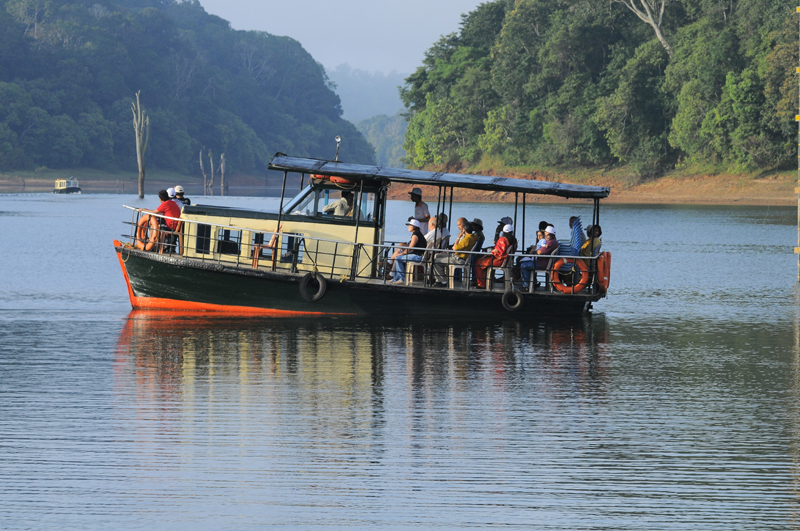
The Pamba River occupies a central place in the Sabarimala pilgrimage, both ritually and ecologically. For pilgrims, Pamba is a purifying threshold. Bathing in its waters marks the transition from the secular world to the sacred ascent. The riverbank becomes a temporary city during the pilgrimage season, hosting millions of bodies, rituals, and moments of quiet reflection.
Ecologically, however, this concentration of human activity places enormous strain on the river system. Studies have documented significant seasonal increases in pollution levels, solid waste accumulation, and stress on riparian vegetation during the pilgrimage months [11]. The challenge of balancing ritual use with environmental protection has become one of the most pressing issues associated with Sabarimala.
Efforts by government agencies, religious authorities, and civil society groups to manage waste, regulate bathing areas, and restore the river have produced mixed results. While awareness has increased, the scale of the pilgrimage continues to test the limits of ecological resilience [12].
From the perspective of spiritual tourism, Pamba offers a powerful lesson. Sacredness does not exempt a landscape from ecological limits. On the contrary, it demands a higher level of responsibility. To treat the river as sacred while allowing it to degrade is a contradiction that challenges the moral foundations of the pilgrimage itself.
11. Movement, Meaning, and the Pilgrimage Experience
Credit: Praveenp, CC BY-SA 4.0 (license), via Wikimedia Commons
Taken together, the seasonal rhythms, pilgrimage routes, forest paths, and river rituals of Sabarimala reveal a deeply integrated spiritual system. Time dictates when one may come; space dictates how one must travel. The pilgrim does not simply arrive at Sabarimala — he or she is gradually transformed through movement.
This transformation is what distinguishes Sabarimala from many contemporary spiritual destinations. It resists instant gratification and insists on duration, discomfort, and discipline. In doing so, it preserves an older grammar of pilgrimage that speaks powerfully to modern concerns about speed, consumption, and ecological neglect.
Understanding these dimensions is essential before approaching questions of facilities, crowd management, or tourism promotion. Without recognising how movement and meaning are intertwined at Sabarimala, any discussion of spiritual tourism remains incomplete.
PART III – Vratham, Irumudi, and the Discipline of Embodied Devotion
12. Vratham: Preparing the Body and Mind for Pilgrimage
The Sabarimala pilgrimage does not begin at Pamba or Erumeli; it begins weeks earlier in the daily life of the devotee. Central to this preparation is the forty-one-day vratham, a period of ritual discipline that reshapes behaviour, diet, speech, and social conduct. During this time, the pilgrim commits to celibacy, abstains from alcohol and intoxicants, follows a predominantly vegetarian diet, and adopts a simplified lifestyle [13].
The vratham is not merely a set of prohibitions. It functions as a gradual withdrawal from everyday distractions, creating a mental and emotional readiness for the journey ahead. Pilgrims traditionally wear black, blue, or saffron clothing, avoid personal adornment, and practice humility in social interactions. These outward markers signal an inward transformation, marking the devotee as someone temporarily set apart from ordinary life.
From an anthropological perspective, the vratham represents a classic rite of separation. By altering routine behaviour, the pilgrim enters a liminal state — no longer fully embedded in everyday social roles, but not yet reintegrated through the completion of the pilgrimage. This liminality is essential to the spiritual intensity associated with Sabarimala.
13. The Irumudi Kettu: Ritual Object and Moral Symbol
Among the most distinctive features of the Sabarimala pilgrimage is the Irumudi kettu, a twin-compartment cloth bundle carried on the head of the pilgrim. One compartment contains offerings intended for Lord Ayyappa, most notably the coconut filled with ghee, while the other holds personal items required for the journey [14].
The preparation of the Irumudi is itself a ritual act, often performed collectively under the guidance of a senior devotee or guruswamy. Specific rules govern what may be placed inside, how the bundle is tied, and how it must be carried. Traditionally, the Irumudi should not be placed on the ground once the pilgrimage has begun, reinforcing the idea that the devotee’s burden is sacred.
Symbolically, the two compartments are often interpreted as representing the balance between spiritual aspiration and worldly necessity. The pilgrim carries both, acknowledging that renunciation does not imply the denial of physical needs, but their disciplined integration into a higher purpose.
14. The Guruswamy and Collective Responsibility
The figure of the guruswamy plays a crucial role in shaping the ethical and ritual framework of the pilgrimage. As an experienced pilgrim, the guruswamy guides newcomers through the vratham, oversees the preparation of the Irumudi, and leads the group along the pilgrimage route [15].
This leadership is not hierarchical in a conventional sense. The guruswamy’s authority is rooted in example rather than command. He is expected to embody the virtues associated with Ayyappa devotion — patience, compassion, restraint, and responsibility. Any failure in discipline by an individual pilgrim is understood as a collective concern, reinforcing mutual accountability.
Such group-based pilgrimage structures help sustain the moral economy of Sabarimala. In a context where millions participate, these micro-communities preserve ethical continuity, ensuring that the pilgrimage remains a shared moral undertaking rather than an individualised spiritual transaction.
15. Ritual Purity, Everyday Ethics, and Modern Challenges
Traditional understandings of ritual purity during the vratham extend beyond physical cleanliness to encompass speech, intention, and behaviour. Pilgrims are expected to avoid conflict, practice generosity, and maintain emotional restraint. In this sense, the pilgrimage discipline functions as an ethical training rather than a narrowly religious obligation.
However, the scale and speed of modern pilgrimage have complicated the maintenance of these ideals. Digital bookings, rapid transport, and compressed schedules risk reducing vratham to a symbolic formality rather than a lived transformation. This tension raises important questions about how ritual discipline can be preserved in a rapidly changing social environment [16].
Addressing this challenge requires more than nostalgia. It demands conscious adaptation — educational initiatives, community leadership, and renewed emphasis on ethical meaning rather than mere ritual compliance. Without such efforts, the pilgrimage risks becoming detached from the very values that once defined it.
16. Embodied Devotion and the Meaning of Effort
The physical demands of the Sabarimala pilgrimage are not incidental hardships to be minimised but integral components of devotion. Walking long distances, carrying the Irumudi, climbing steep paths, and enduring fatigue are all understood as forms of offering. Effort itself becomes prayer.
In an age increasingly oriented toward comfort and convenience, this emphasis on bodily discipline stands out. It reminds participants that spiritual transformation often requires discomfort and patience. The body, in this framework, is not an obstacle to spirituality but its primary instrument.
This understanding of embodied devotion forms the ethical bridge between ritual practice and ecological responsibility. A pilgrimage that values restraint and effort is inherently aligned with sustainability. When this alignment is honoured, Sabarimala offers not only a religious experience but a profound lesson in living with limits.
PART IV – Ecology, Governance, and the Ethics of Responsible Spiritual Tourism
Credit: Shantham11, CC BY-SA 4.0 (license), via Wikimedia Commons
17. Ecological Stress and the Fragile Sacred Geography
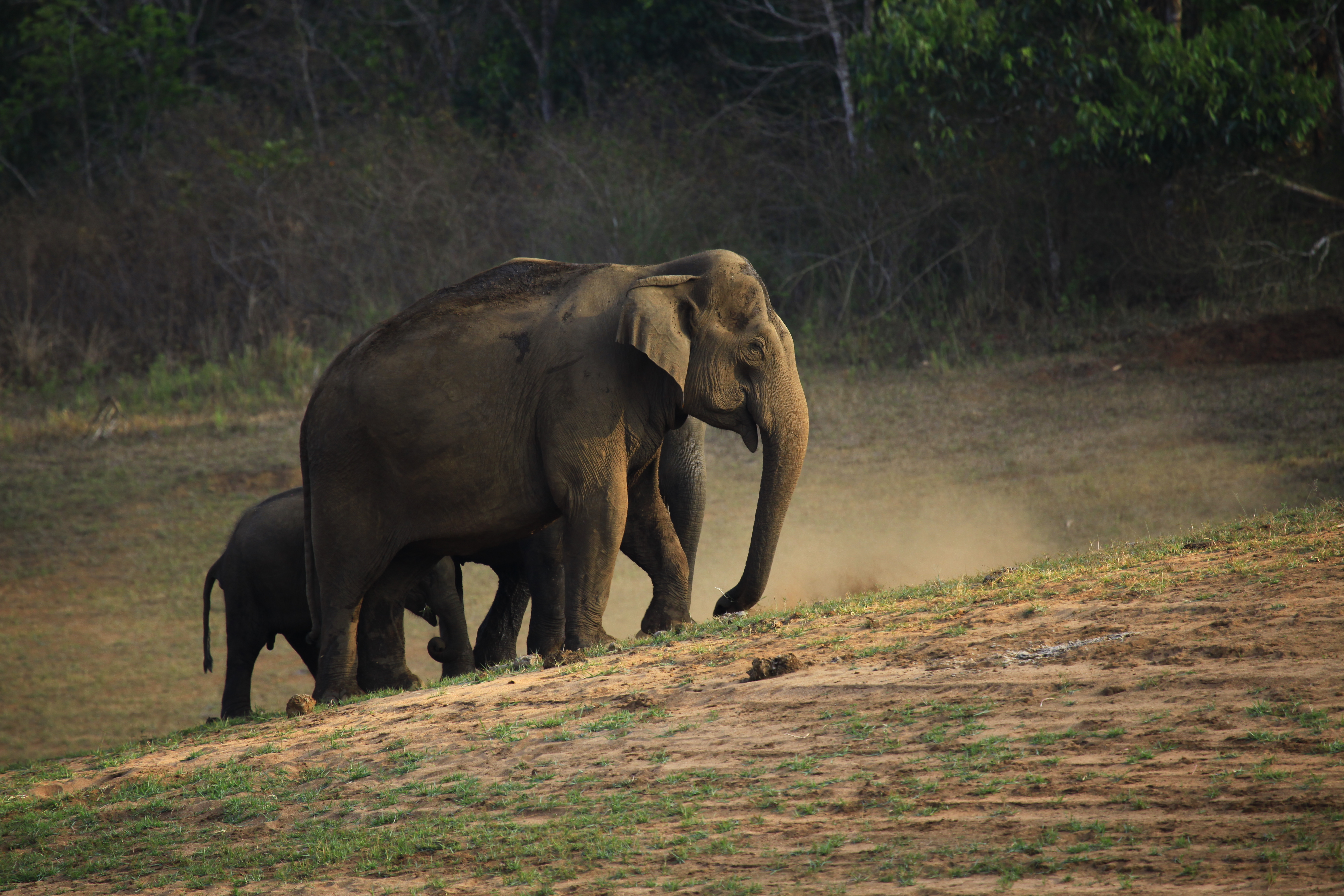
The ecological context of Sabarimala is inseparable from its spiritual meaning. Situated within the forested landscape of the Western Ghats, one of the world’s recognized biodiversity hotspots, the pilgrimage zone overlaps with fragile ecosystems that include dense evergreen forests, riverine corridors, and wildlife habitats [19]. The seasonal influx of millions of pilgrims exerts pressures that no traditional pilgrimage system was designed to withstand.
Environmental studies conducted in the Sabarimala–Pamba region have repeatedly pointed to issues such as soil erosion along trekking paths, deforestation at resting points, disruption of wildlife movement, and severe seasonal pollution of water bodies [20]. These impacts are not constant throughout the year but spike dramatically during the Mandalam–Makaravilakku season, creating cyclical ecological stress.
The contradiction is evident: a pilgrimage rooted in austerity and restraint has evolved into an event that risks exhausting the very landscape that sustains it. This tension forces a re-examination of how sacred geography is understood and protected in the context of mass participation.
18. Waste, Water, and the Moral Economy of Pilgrimage
Among the most visible challenges at Sabarimala is the management of waste. Despite repeated awareness campaigns and regulatory measures, the accumulation of plastic, food waste, discarded clothing, and ritual materials continues to pose serious threats to soil and water quality [21]. The Pamba River, in particular, bears the cumulative burden of ritual bathing, untreated waste, and surface runoff during peak season.
What makes this issue ethically significant is the dissonance between belief and practice. Ritual purity, which occupies a central place in the pilgrimage, often fails to extend to environmental responsibility. This gap has been noted by environmentalists and social commentators as a crisis of moral consistency rather than merely administrative failure.
Efforts to address this problem have included plastic bans, designated waste collection zones, volunteer-led cleaning drives, and judicial interventions. While these measures have brought incremental improvements, they remain insufficient without deeper behavioural change among pilgrims themselves [22].
19. Governance, Regulation, and the Limits of Control
The governance of Sabarimala involves a complex network of institutions, including the Travancore Devaswom Board, state government departments, forest authorities, police forces, and disaster management agencies. Coordinating these bodies during peak pilgrimage season is a logistical challenge of exceptional scale [23].
Regulatory mechanisms such as virtual queue systems, daily pilgrim caps, route segregation, and time-slot based darshan have been introduced to manage crowd flow and enhance safety. While these measures have reduced certain risks, they also transform the pilgrimage into a heavily mediated experience, raising concerns about bureaucratisation of devotion.
This tension highlights the limits of purely administrative solutions. Governance can regulate movement and mitigate immediate hazards, but it cannot substitute for ethical commitment among participants. Sustainable pilgrimage requires not only rules but shared responsibility.
20.Government-Regulated Booking System for Sabarimala Pilgrimage
To ensure safety, crowd management, and a dignified pilgrimage experience, the Government of Kerala has introduced a mandatory online booking system for Sabarimala devotees. Pilgrims are required to complete registration and select their preferred date and time slot for darshan well in advance.
Through this system, devotees can book Virtual-Q darshan, obtain pilgrimage passes, and access official updates related to temple entry regulations, seasonal guidelines, and crowd control measures. This initiative is especially important during the Mandala–Makaravilakku season, when footfall reaches its peak.
Devotees are strongly advised to use only the official government portal for all bookings and related services to avoid misinformation or unauthorised intermediaries.
Official Sabarimala Booking Website:
https://sabarimala.kerala.gov.in
21. Sabarimala and the Philosophy of Responsible Spiritual Tourism
Responsible spiritual tourism, in the context of Sabarimala, cannot be understood as a branding strategy or an optional add-on. It must emerge from the internal logic of the pilgrimage itself. The values of restraint, humility, and self-discipline that define Ayyappa devotion provide a strong ethical foundation for sustainable practice.
This means reimagining pilgrimage not as a right to consume sacred space, but as a duty to protect it. Responsible pilgrims minimise waste, respect ecological boundaries, follow local guidelines, and recognise that their spiritual fulfilment is inseparable from the wellbeing of the landscape [24].
For Kerala’s tourism discourse, Sabarimala offers an alternative model—one that challenges the assumption that growth must always mean expansion. Here, sustainability may require limits, slower movement, and deeper engagement rather than increased numbers.
22. Beyond Sabarimala: Lessons for Sacred Travel in the Modern World
The questions raised by Sabarimala resonate far beyond Kerala. Across the world, sacred sites are struggling to reconcile ancient traditions with modern mobility. What distinguishes Sabarimala is the clarity with which it exposes the stakes of this struggle.
If the pilgrimage is reduced to logistics alone, it risks losing its moral core. If ecological limits are ignored, it risks destroying its physical foundation. The future of Sabarimala therefore depends on a delicate balance—between devotion and discipline, access and restraint, faith and responsibility.
In this sense, Sabarimala stands not only as a sacred hill shrine but as a living question posed to contemporary spiritual tourism: can reverence survive scale, and can belief guide behaviour in an age of mass movement?
PART V – Responsible Pilgrimage in Practice and the Future of Sabarimala
23. A Framework for Responsible Pilgrimage
If Sabarimala is to remain spiritually meaningful and ecologically viable, responsibility must be understood as an integral part of devotion rather than an external regulation. The ethical framework already exists within the pilgrimage tradition itself. The values of restraint, discipline, humility, and collective care that define Ayyappa worship provide clear guidance for responsible conduct.
Responsible pilgrimage begins with intention. Pilgrims are encouraged to approach the journey not as a right to access sacred space, but as a commitment to protect it. This includes minimizing material consumption, avoiding single-use plastics, respecting forest regulations, and adhering strictly to waste-segregation practices [25].
Equally important is attentiveness to fellow pilgrims. Offering assistance to the elderly, avoiding aggressive behaviour in queues, and respecting silence and ritual space are all expressions of spiritual maturity. These actions reinforce the communal ethic that has long distinguished the Sabarimala pilgrimage.
24. Practical Guidance for Pilgrims and Visitors
While Sabarimala is not designed as a casual visitor destination, increasing numbers of people approach it seeking cultural or spiritual understanding. For such visitors, respectful engagement is essential. Observing rituals without interference, refraining from intrusive photography, and following dress and conduct guidelines are basic forms of cultural sensitivity.
Pilgrims should prepare physically and mentally for the journey. Adequate rest, hydration, appropriate footwear for forest terrain, and awareness of health advisories are crucial. Overexertion not only endangers individuals but places additional strain on emergency services and infrastructure [26].
Participation in volunteer initiatives, such as river clean-up efforts or waste-management teams, offers pilgrims an opportunity to translate devotion into service. Such acts restore the ethical balance between ritual practice and environmental stewardship.
25. Integrating Sabarimala into a Broader Spiritual–Nature Itinerary
For those seeking deeper engagement with Kerala’s spiritual landscape, Sabarimala may be approached as part of a wider itinerary that emphasises reflection rather than consumption. Nearby locations such as Erumeli, Nilakkal, and the forested stretches along the Pamba offer spaces for quiet contemplation and cultural learning.
When combined thoughtfully, pilgrimage and nature exploration can reinforce one another. Walking forest trails with ecological awareness, learning about river conservation, and engaging with local communities provide context that enriches the Sabarimala experience without diluting its sanctity.
Such integrative approaches align closely with Kerala’s emerging emphasis on low-impact, value-driven tourism, where depth of experience is prioritised over volume of visitors.
26. Sabarimala and the Future of Spiritual Tourism
The future of Sabarimala depends on choices made in the present. Administrative efficiency, technological systems, and infrastructure upgrades can mitigate immediate challenges, but they cannot substitute for ethical commitment. Without a shared sense of responsibility, even the most advanced management systems will fall short.
Sabarimala’s enduring relevance lies in its refusal to simplify spirituality. It insists on effort, patience, and moral discipline. In doing so, it offers a powerful counterpoint to forms of spiritual tourism that promise transformation without sacrifice.
As global interest in sacred travel continues to grow, Sabarimala stands as a reminder that spiritual destinations are not commodities to be consumed, but relationships to be honoured. Preserving this understanding is the greatest responsibility of all who walk the path to the hill shrine.
27. Conclusion: The Path and the Promise
Sabarimala endures not because it is easy to reach, but because it asks something of those who approach it. The pilgrimage binds body and belief, landscape and discipline, personal devotion and collective responsibility. Its power lies in this integration.
For Kerala, Sabarimala represents both heritage and challenge — a sacred tradition navigating the pressures of modern scale. For pilgrims, it remains a moral journey as much as a physical one. And for those reflecting on spiritual tourism, it offers a profound lesson: that the true destination is not only a shrine on a hill, but a transformed relationship with self, society, and nature.
References
- Kerala Tourism Department. “Sabarimala Temple.” Official tourism portal of Kerala; Wikipedia contributors. “Sabarimala Temple.” Wikipedia, The Free Encyclopedia.
- Kottarathil Sankunni. Aithihyamala. Various editions; Regional oral traditions and temple legends associated with Lord Ayyappa.
- Logan, William. Malabar Manual. Government Press, Madras; Folklore studies on Erumeli and Vavar traditions; Kerala cultural history sources.
- Travancore Devaswom Board. Administrative records and historical notes on Sabarimala Temple management.
- Deccan Herald; The Hindu; Business Standard. Reports on Sabarimala pilgrimage footfall during Mandalam–Makaravilakku seasons (various years).
- Travancore Devaswom Board. Official ritual calendar and pilgrimage season notifications.
- Narayanan, M. G. S. Studies on Kerala religious traditions; Historical references to Makara Sankranti and Makaravilakku practices.
- Kerala Folklore Academy publications; Ethnographic accounts of the Erumeli pilgrimage route and associated rituals.
- Pathanamthitta District Administration. Route maps, access guidelines, and pilgrimage infrastructure documents.
- Menon, A. Sreedhara. Cultural Heritage of Kerala. Interpretations of temple symbolism and ritual structures.
- Centre for Water Resources Development and Management (CWRDM), Kerala. Environmental studies on Pamba River water quality during pilgrimage seasons.
- Kerala High Court. Orders and observations related to environmental protection and waste management at Sabarimala.
- Fuller, C. J. The Camphor Flame: Popular Hinduism and Society in India. Comparative analysis of pilgrimage discipline and ritual austerity.
- Nair, Raghavan Payyanad. Studies on Ayyappa worship and Irumudi symbolism; Kerala folklore journals.
- Turner, Victor. The Ritual Process: Structure and Anti-Structure. Concept of liminality and communitas applied to pilgrimage studies.
- Singh, Rana P. B. “Pilgrimage and Sacred Geography.” Contemporary research on ritual transformation in mass pilgrimages.
- UNESCO. “Western Ghats Biodiversity Hotspot.” Ecological documentation and conservation framework.
- Gadgil, Madhav; Guha, Ramachandra. Ecology and Equity. Environmental stress and human–nature interactions in Indian landscapes.
- Kerala Forest Department. Reports on pilgrimage-related ecological stress in Periyar Tiger Reserve region.
- Suchitwa Mission, Government of Kerala. Solid waste management reports related to pilgrimage centres.
- Kerala State Pollution Control Board. Seasonal pollution assessments of the Pamba River.
- Kerala High Court–appointed monitoring committees on Sabarimala sanitation and waste control.
- Government of Kerala. Disaster Management Authority advisories for Sabarimala pilgrimage seasons.
- Dudley, Nigel et al. Sacred Natural Sites: Conserving Nature and Culture. IUCN–UNESCO collaborative studies.
- UN World Tourism Organization (UNWTO). Guidelines on sustainable and responsible tourism.
- Kerala State Disaster Management Authority (KSDMA). Pilgrim safety and health advisories.